News & Updates
-
POSTECH Opens a New Era of Artificial Organs that Can be Freely Assembled
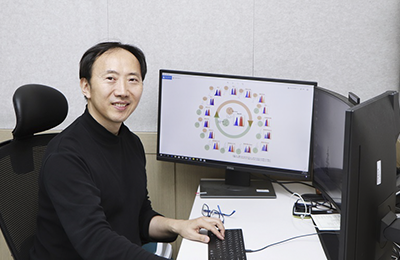
[A research team led by Professor Wan Kyun Chung is selected for the Alchemist Project to develop industrial technology] A POSTECH research team led by Professor Wan Kyun Chung has been selected for the “Soft Implant without Immunorejection,” one of the themes in the 2020 Alchemist Project organized by the Ministry of Trade, Industry and Energy in Korea. The team will develop personalized artificial organs based on the bioprinting technology and a robot system that can automate this process. The Alchemist Project was named after the alchemists who tried to turn metal into gold. It will support the development of the most difficult technologies for the problems for which there is currently no solution, accompanying a high risk of failure. Under the leadership of Professor Wan Kyun Chung, professors Jinah Jang, Dong-Woo Cho, Dong Sung Kim, Seungchul Lee and Keehoon Kim (Department of Mechanical Engineering), who specialize in different areas, including artificial intelligence, robotics, and artificial organs, will participate in this project. The team plans to develop technologies for modular manufacturing, assembly and culture, as well as cells and biomaterials needed for fabricating artificial organs, including the liver and the pancreas, with 3D bio-printing technology. In particular, the team plans to develop 3D bioprinting technology to make large-volume, vascularized liver and pancreas modules, including thin capillary vessels. Furthermore, the researchers will improve the efficiency of making artificial organs by developing a robot system that can automatically assemble and connect liver or pancreas modules with thick blood vessels to make implantable artificial organs. For the cells to make these artificial organs, the team will use pluripotent stem cells with reduced immunorejection by introducing CRISPR technology. The cells will be divided into liver cells, vascular cells, and pancreatic ductal cells before being printed into organs. POSTECH has already achieved excellent results in manufacturing artificial organs with 3D bioprinting, attracting attention from both academia and industries. Earlier, the university succeeded in producing artificial blood vessels, such as blood vessel tissues, for the human body. Replicating diseases ex-vivo using these blood vessels has opened up the possibility of using the technology for customized treatments. In the meantime, POSTECH has also attracted a project in 2022 to construct a manufacturing facility for artificial organs with bioprinting. As such, Pohang, where the school is located, is expected to grow into a hub for bioprinting-based artificial organs. This Alchemist Project will provide 20 billion KRW (USD 16 million) in total over five years beginning in 2022. The universities participating in this project include Asan Medical Center, Seoul St. Mary’s Hospital, Hanyang University Medical Center, Korea University, Seoul National University of Science and Technology, University Industry Foundation of Yonsei University, and Ulsan National Institute of Science and Technology (UNIST). Korean companies including ToolGen, Inc., T&R Biofab Co. Ltd,, Celloid, Next&Bio Inc., Neuromeka Co. Ltd., cellArtgen Inc., EDmicBio Inc., and GenNBio, will also collaborate on the project.
2022.05.10 1617 -
POSTECH Computer Vision Lab to Present the Largest Number of Papers among Korean Institutes at CVPR 2022
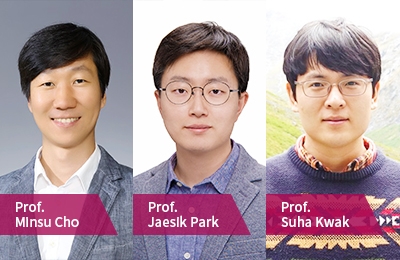
[The Lab is led by professors Suha Kwak, Jaesik Park and Minsu Cho.] The Computer Vision Lab at POSTECH will present the largest number of papers among Korean institutes participating at the 2022 Conference on Computer Vision and Pattern Recognition (CVPR). The CVPR conference, which has been co-hosted by the Institute of Electrical and Electronics Engineers (IEEE) and the Computer Vision Foundation (CVF) since 1983, is the most influential international academic conference in AI. The Google Scholar h-index ranks it as high as 4th in the science and engineering sector, indicating its great influence (cf. Nature rank 1st, Science ranks 3rd and Cell ranks 7th). It is also mentioned as one of the three major academic conferences in computer vision along with the International Conference on Computer Vision (ICCV) and the European Conference on Computer Vision (ECCV). The lab, led by Professor Minsu Cho (Department of Computer Science and Engineering, Department of Convergence IT Engineering) and professors Jaesik Park and Suha Kwak (Department of Computer Science and Engineering, Graduate School of Artificial Intelligence), will present 16 papers which is the largest number of papers among the participating Korean university labs and corporate research institutes this year. It is globally rare to see this many papers being accepted from a single lab and the number of papers from each professor is the largest number in Korea as well. Moreover, it is noteworthy that the professors from different specialties in the field of computer vision worked closely together in a lab to reach this achievement. Professor Minsu Cho is an expert in image registration. He focuses on the artificial intelligence that learns and reasons the associations among various visual elements in video, such as symmetry detection, action recognition, and geometric shape assembly. Professor Jaesik Park excels in the field of 3D vision, which deals with reconstruction and recognition of 3D spaces. He has proposed a technique for inferring 3D spatial layouts from an image of an object – a technique for understanding 3D space using deep learning – and an AI painting technique for the metaverse space. Professor Suha Park achieved stellar results in training video-recognition AI with minimum information. He also studies AI that deals with both video and natural language, and an AI technology that can perform strongly in a variety of unfavorable conditions. The CVPR 2022 will be held both online and offline from June 19 to 24, 2022 (local time) in New Orleans, Louisiana.
2022.05.09 1956 -
Professor Jinah Jang Wins the Outstanding Young Manufacturing Engineers Award
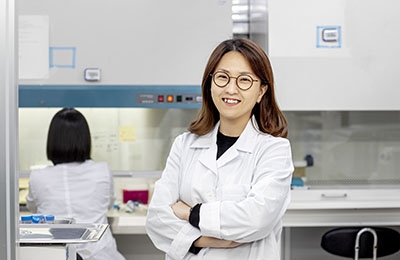
Professor Jinah Jang (Department of Convergence IT Engineering and Department of Mechanical Engineering) has recently won the Outstanding Young Manufacturing Engineers Award from the Society of Manufacturing Engineers (SME). Professor Jang is the only Korean among the 22 awardees this year and is the first Korean in 10 years to win the award. The award is presented to engineers under the age of 35 who have achieved exceptional accomplishments in manufacturing. Professor Jang is recognized for her contributions to 3D bioprinting and tissue engineering. Professor Jang received her Ph.D. from POSTECH and was appointed to the POSTECH faculty in 2017 after serving as a post-doctoral fellow at the Institute for Stem Cell & Regenerative Medicine at the University of Washington. Her primary research focuses on the development and application of tissue-specific decellularized extracellular matrix bioink which is printed in three-dimensional form using a bioprinter after wrapping cells with bioink. Not only is the effectiveness of the material on complex-shaped organs and tissues such as the heart, vessels and pancreatic tissues confirmed to be outstanding, but it also has drawn enormous attention from academic circles and industry due to its capacity to imitate the biochemical and biological composition of tissues. With her research achievement, Professor Jang published over 95 peer-reviewed papers in authoritative journals. Her H-index and citations have reached 38 and 6,260 respectively, which demonstrate the productivity and influence of her research. Furthermore, Professor Jang currently serves as an associate editor of the journal Bio-Design and Manufacturing and as a board member of the International Society for Biofabrication (ISBF). She has received the ISBF Young Scientist Award in 2014, the Excellence Award for Young Scientist from the Korea Federation of Women's Science and Technology Associations (KOFWST) in 2016 and the Medipost New Scientist Award from the Korean Tissue Engineering and Regenerative Medicine Society (KTERMS) in 2021. Since 1979, the Society of Manufacturing Engineers (SME) has been presenting these awards to manufacturing engineers worldwide aged 35 or younger after evaluating their research achievements such as publications, academic activities, and academic contributions. The Outstanding Young Manufacturing Engineer Award is highly regarded for its significant contributions to fostering outstanding manufacturing engineers. The awards ceremony is scheduled to be held at the society’s annual meeting in West Lafayette, Indiana in July 2022.
2022.05.02 1854 -
Professor YoungJu Choie Receives the Hyeoksin Medal of the Order of Science and Technology Merit
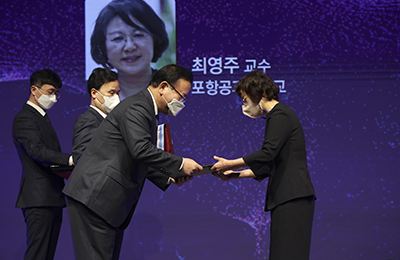
Professor YoungJu Choie (Department of Mathematics) has recently won the Hyeoksin Medal of the Order of Science and Technology Merit at the 2022 Science and ICT Day Ceremony. After graduating from Ewha Womans University, Professor YoungJu Choie received her Ph.D. from Temple University in the U.S. and was appointed to POSTECH in 1990. Since then, she has been making significant contributions to the advancement of mathematics in Korea by serving as president of the Korean Women in Mathematical Sciences (KWMS) and as a deliberative member of the Presidential Advisory Council on Science and Technology, and to the development of POSTECH’s Department of Mathematics. Recognized for her academic achievements in mathematics and extensive involvement in the international community, Professor Choie was selected as an inaugural fellow of the American Mathematical Society in 2013 and as a fellow member of the Korean Academy of Science and Technology in 2018. She was also the winner of last year’s Kyung-Ahm Prize. Among her accomplishments, one that particularly stands out is leading the academic development on the theory of automorphic forms. She was awarded the Hyeoksin Medal for her contribution in elevating the prestige of Korean mathematics through her vast international activity and for fostering talent and raising the public understanding of science. Through her research on the periods of automorphic forms, Professor Choie achieved a substantial breakthrough in understanding the special values of L-functions, regarded as one of the biggest challenges of the 21st century in number theory. Furthermore, by applying it to theoretical physics and ICT and to the mutual convergence theory along with number theory and IT, Professor Choie has demonstrated their potential for development. At this year’s ceremony, which celebrated the 55th Science Day (April 21) and the 67th ICT day (April 22), a total of 162 awardees were presented with government prizes for their dedication to science, technology and ICT promotion, and to the national research and development of Korea.
2022.04.27 1832 -
Professor Young-Tae Chang Wins the Excellence Academic Award from Korean Chemical Society
Professor Young-Tae Chang (Associate Director of IBS Center for Self-assembly and Complexity) recently won the Organic Chemistry Division Award for Excellent Research (Sang Chul Shim Award) from the Korean Chemical Society. Professor Young-Tae Chang who received his Ph.D. from POSTECH was appointed to the POSTECH faculty in 2017 after teaching at New York University and National University of Singapore. Profess Chang pioneered an innovative research area that uses fluorescent molecules to differentiate living cells and was recognized for his unique and outstanding research findings in organic chemistry and his contribution to the advancement in the Organic Chemistry Division. He drew attention from academic circles after demonstrating that cells could be differentiate using only organic molecules – which conventionally had to use antibodies – and systematically established that mechanism. In addition, Professor Chang systematized the identification of target proteins inside cells, a challenge in the chemical biology community, and is often called a ‘fluorescent alchemist’ for constructing a ‘fluorescent library’ with more than 10,000 fluorescent molecules. The Organic Chemistry Division of the Korean Chemical Society awards the Sang Chul Shim Award to one researcher who has accomplished outstanding work in organic chemistry every year. Three researchers from POSTECH including Professor Jaiwook Park, Professor Young Ho Rhee and Professor Hyun-Suk Lim of the Department of Chemistry have won this award.
2022.04.21 1757 -
Prof. Chong Soo Lee Creates ISO Standards for Core Hydrogen Energy Technology
Professor Chong Soo Lee of POSTECH's Graduate Institute of Ferrous & Energy Materials Technology (GIFT) in collaboration with the Korea Testing Laboratory (KTL) has created two ISO standards for evaluating hydrogen embrittlement safety of materials, one of key hydrogen energy technologies. The two standards are for the comprehensive hydrogen embrittlement test, including high-pressure tests, electrochemical tests, and salt water spray tests to evaluate the safety of hydrogen vulnerability. This is an essential method for evaluating the safety of materials used in building hydrogen energy infrastructure. Hydrogen embrittlement is a phenomenon in which hydrogen is absorbed into a metal, weakening the mechanical properties. When it occurs in metals such as steel, serious accidents can occur including destruction of large machines or structures. Hydrogen energy has been attracting attention as an alternative to overcoming the climate crisis caused by excessive carbon use. Although technologies such as hydrogen station construction that increases the efficiency of hydrogen fuel cells are set to be commercialized, evaluation technologies and international standards for hydrogen vulnerability of materials had not been established yet. The research team led by Professor Chong Soo Lee and KTL have established international standards through joint research over the past decade. The enactment of this international standard is significant in that Korea can secure technological leadership when building hydrogen energy infrastructure in the future. The two international standards created and revised are ISO 16573-1: 2015 (established), 2020 (revised) and ISO 16573-2: 2022 (established).
2022.04.18 1590 -
Introducing Korea’s First e-Sports Colosseum at POSTECH
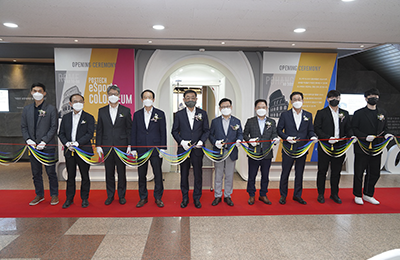
[The new e-Sports pub allows 50,000 students around the world to connect and compete in e-Sports games.] [Taking a step closer to ‘Amusement POSTECH,’ catering to the tastes of millennials and Generation Z, made possible by the support from Woori Bank.] POSTECH is now the first Korean university to open an e-Sports arena on a university campus to let students around the world compete in e-Sports games. The e-sports Colosseum is a sports pub where students can watch e-Sports games and enjoy food and drinks. POSTECH is the only university in Korea to open an e-Sports pub dedicated only to e-Sports on university premises. Among American universities, University of Arizona and Southern New Hampshire University have announced their plans for an e-Sports stadium, but only Livingstone College has a venue that includes a sports pub component. However, these facilities differ from POSTECH's Colosseum in that they are actually forming e-Sports teams, whereas POSTECH is focusing on the play culture and the exchange between students. The e-Sports Colosseum was inspired by the ancient Roman Colosseum that served as a public entertainment facility where members felt a sense of unity while watching games. While the e-Sports Colosseum is an entertainment facility that students can actually visit and enjoy, it is also a space on the metaverse where 50,000 students around the world can simultaneously access and watch games together. It is also meaningful that this is a project in which Metaversity (word combining metaverse and university) that POSTECH has been striving for – to expand the physical campus into the metaverse – has been actualized. Thanks to the completion of the e-Sports Colosseum, student exchange with international universities is expected to take place more freely through metaverse, compared to the conventional games like the POSTECH-KAIST Science War. Since 2021, POSTECH has announced plans to create a university where its members lead happier lives by expanding the campus to the metaverse. This e-Sports Colosseum is one of the ‘Amusement POSTECH’ projects that allow students to enjoy a variety of experiences on campus. The Colosseum was designed to meet the interactive digital communication and fan culture needs of the millennials and Generation Z displayed during the last Tokyo Olympics and Beijing Winter Olympics. The e-sports Colosseum is designed so that the students can not only hold actual e-sports competitions, but also watch live sporting events and concerts, such as the upcoming FIFA World Cup Qatar 2022, Olympics, or Premier League soccer matches. Woori Bank, which has actively supported the play culture of millennials and Generation Z, gave wings to this rather interesting project to create a venue right on campus where students can enjoy games and food. The first financial institution to serve as the title sponsor of League of Legends Champions Korea (LCK), Woori Bank has been a leader in supporting the e-Sports industry by hosting high-level League of Legends (LoL) championships and opening an exclusive LCK page in the Woori Bank app for LKC fans. By contributing to building the e-Sports Colosseum at POSTECH, Woori Bank has shared the school’s vision to lead the play culture of students. The completion ceremony was held at POSTECH on April 6 and was attended by President Won-deok Lee, Vice President Seok-tae Lee, and Vice President Wan-shik Park of Woori Bank and President Moo Hwan Kim and Vice President Kwang-Jae Kim of POSTECH, among other guests from both organizations. President Won-deok Lee of Woori Bank remarked, “We hope that the outstanding students of POSTECH will use the new e-Sports Colosseum that bridges the metaverse and the real world as a platform to play freely and enjoy a variety of experiences.” He added, “We will fully promote the play culture of the game industry and help to expand the landscape of e-Sports in the future.” “Metaversity is a university where students can enjoy different activities in the real and virtual campus and this e-sports Colosseum kicks off our first step toward metaversity and ‘Amusement POSTECH’,” remarked President Moo Hwan Kim of POSTECH. “We are delighted that this space that students can enjoy has become that very first step, and this fun challenge was made possible thanks to Woori Bank's insight who shared in our vision.” To celebrate the completion of the e-Sports Colosseum, POSTECH will hold a League of Legends tournament from April 18 – 29, 2022.
2022.04.06 21858 -
Professor Yong-Geun Oh Wins the Samsung Ho-Am Prize
[Winner of the Ho-Am Prize in Physics and Mathematics, Prof. Oh is recognized as a leader in symplectic geometry and symplectic topology.] Professor Yong-geun Oh (Director of the IBS Center for Geometry and Physics) of the Department of Mathematics at POSTECH was selected as a winner of the 2022 Samsung Ho-Am Prize in Physics and Mathematics by the Ho-Am Foundation on April 6, 2022. Professor Yong-Geun Oh, who received his Ph.D. from UC Berkeley, was appointed to POSTECH in 2013 after working as a professor at University of Wisconsin-Madison. Professor Oh is regarded as a world-leading mathematician in the areas of symplectic geometry and symplectic topology. He developed a theoretical foundation and important application methods for Floer homology*1 in symplectic topology. This is regarded as a pioneering study that is the basis for convergence studies with theoretical physics such as string theory as well as mathematics. Floer homology is a concept introduced for the proposition that ‘the mathematical concept of the uncertainty principle*2 of quantum mechanics exists even in classical mechanics.’ Previously, the Floer homology theory could not be applied to other studies of symplectic geometry other than this proposition. Professor Oh developed an original method that uses Floer homology theory as a fundamental tool for the research on symplectic space and applied it to other studies, laying the foundation for the development of modern symplectic geometry and making progress. In addition, by demonstrating that the algebraic language Fukaya category*3 also exists in Floer homology, that algebraic language has been evaluated as a textbook achievement in modern simplectic geometry and symplectic topology. Recognized for these contributions to mathematics, Professor Oh was the first Korean to give a lecture at the International Congress of Mathematicians (ICM)*4, considered as the Olympics of mathematics and shared research findings in the field of geometry with the international mathematics community. Four people from POSTECH have previously won the Ho-Am Prize including the former president Yongmin Kim, Professor Kimoon Kim, former professors Sanguk Jeong and Minhyong Kim. 1. Floer homology Expansion of important topological information of space to the energy level 2. Uncertainty principle The principle that both the position and momentum of a particle cannot be known precisely. 3. Fukaya category A category that comprehensively includes relationships, mutual structures, etc. between different simplectic manifold. 4. International Congress of Mathematicians (ICM) An international convention for mathematicians organized by the International Mathematical Union (IMU) held every four years. The first convention was held in Zurich, Switzerland in 1897.
2022.04.06 1939 -
Prof. Youn-Bae Kang of GIFT Appointed as Associate Editor of ISIJ International
[Professor Kang is the first international member without a degree from a Japanese institution to be appointed to the position. His term begins in April for four years.] Professor Youn-Bae Kang of the Graduate Institute of Ferrous& Energy Materials Technology (GIFT) at POSTECH was recently appointed as the associate editor of ISIJ International, an international journal published by the Iron and Steel Institute of Japan (ISIJ). ISIJ International is an academic journal published since 1961 by ISIJ, which boasts world's best steel technology, to share research findings on steel with the international community. Japan prides itself in steel technology and rarely appoints foreign members to the editorial board of ISIJ International. It is very unusual even in the academic world to appoint Professor Yoon-Bae Kang, who has never worked in a Japanese university or company without a degree from a Japanese university. Professor Kang received his Ph.D. from POSTECH and joined its faculty in 2009 after completing his post-doc at the École Polytechnique de Montréal in Canada. He has been actively conducting research in the field of high-temperature processing of steel and metals. He has published excellent research findings, including new technologies for refining tramp elements in iron scraps, which is an important technology for carbon neutrality and steel processing using thermodynamics and phase diagrams, and a technology to prevent clogging of nozzles for continuous casting of ultra-clean steel for automobile steel sheets. Recognized for these accomplishments, Professor Kang received the Sawamura Award, the best thesis award from ISIJ International in 2020, and published an invited review thesis in the Diamond Jubilee issue celebrating the journal’s 60th anniversary in the same year. As the associate editor, Professor Kang will be in charge selecting reviewers, improving the review process, and selecting the thesis award over the next four years.
2022.04.04 1611 -
POSTECH and POSCO Chemical Partner to Raise Experts in Battery Materials
POSTECH has entered into a partnership with POSCO Chemical to raise specialists in cathode and anode materials, used for production of batteries. POSTECH and POSCO Chemical signed an agreement with POSTECH's Graduate Institute of Ferrous & Energy Materials Technology (GIFT) on March 22 to raise specialists in battery materials together by establishing an “e-Battery Track" graduate program. Key stakeholders from both institutions including POSCO Chemical CEO Kyung-Joon Min and POSTECH president Moo Hwan Kim attended the signing ceremony. The new graduate track, which kicks off with the graduate admissions in the second half of 2022, has been created to secure core talents in battery materials, considered as one of the major future industries. New students will be selected for the master's program or the MS/PhD integrated program of the track. The students in the program will be provided with a full tuition support and an additional scholarship. During the course of the program, they will take part in on-site research and corporate projects, and will be guaranteed employment at POSCO Chemical upon graduation. With this partnership with POSTECH, POSCO Chemical has shown its commitment to accelerate plans to train specialized researchers in battery materials and to take the global lead in the secondary battery market. President Moo Hwan Kim emphasized, "POSTECH’s strength lies in elite education and innovative research, and we will help raise outstanding talents who will contribute to the industry and nation through this new partnership with POSCO Chemical, a leader in the field.” "POSCO Chemical has been contributing to the development of the secondary battery industry by being the only company in Korea that produces and conducts research and development on cathode/anode materials,” remarked Mr. Kyung-Joon Min, the CEO of POSCO Chemical. “We will be proactive in nurturing and securing battery talents for our endeavor and secure unrivaled competitiveness in the future battery industry to help develop its ecosystem.”
2022.03.23 1944