News & Updates
-
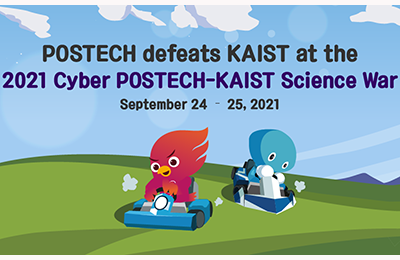
POSTECH Wins the POSTECH-KAIST Science War Again
POSTECH has defeated KAIST in the annual friendly competition known as the POSTECH-KAIST Science War for two years in a row. This year’s POSTECH-KAIST Science War was held over two days on September 24 – 25. Students from the two schools competed in a hackathon, AI programming, science quiz and E-sports games including League of Legends and KartRider. POSTECH beat KAIST in AI programming, science quiz and KartRider but lost points in the hackathon and League of Legends but won enough points to win the overall competition. The POSTECH-KAIST Science War has been held annually in September since 2002 and the two universities have been taking turns in hosting the event. Due to COVID-19, this year’s games were held online. The all-time Science War record is 3 wins for POSTECH and 2 wins for KAIST.
2021.10.03 2253 -
Professor Junsuk Rho Appointed as Associate Editor of MINE
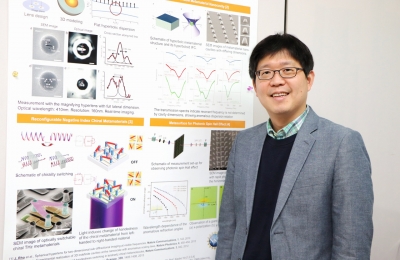
Professor Junsuk Rho of the Department of Mechanical Engineering and Chemical Engineering has been appointed as an associate editor of Microsystems & Nanoengineering (MINE) published by Springer-Nature. Microsystem & Nanoengineering is a world-renowned journal in micro-nano processing, production, device, and systems, and Professor Junsuk Rho is the only Korean who has been appointed as an editor of this journal. Professor Rho will work as a main editor in nano optics and nano processing. Professor Rho’s research mainly focuses on the development of new nano optical materials and devices based on experimental studies on light-material interactions in basic physics and nano units. Professor Rho’s work has been published in nearly 190 journals, including Nature and Science. Garnering global attention as a young, pioneering researcher in nano optical and nano processing, Professor Rho was the first Korean researcher to receive the Young Scientist Award at the Microsystems & Nanoengineering (MINE) Conference, and has won the Young Investigator Award and Lectureship from Micro Electronic Engineering and Micro and Nano Engineering (MEE/MNE) and the Young Investigator Award from Micromachines.
2021.09.16 1611 -
Raising Future Medical Scientists at POSTECH
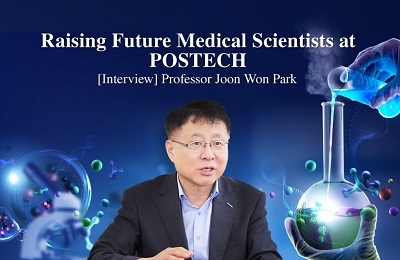
[INTERVIEW] Joon Won Park, former president and chemistry professor at POSTECH - POSTECH’s Graduate School of Medical Science and Engineering* will open in Spring 2023 - Synergy expected from applying POSTECH’s research expertise to new areas of medical science “The goal for nurturing medical scientists (MD-PhDs) is to strengthen the competitiveness of Korea’s bio industry. Academia and industry must go together like two wheels of a chariot. As academia flourishes, industry reaps the benefits. This in turn enables reinvestment into universities which propels a collective growth in academia and industry. However, the bio industry in Korea is currently at a standstill. As students have nowhere to go, the talent pool is dwindling and industrial competitiveness is faltering. I believe cultivating medical scientists is key to enhancing the competence of Korea's bio sector.” Professor Park stresses that fostering medical scientists is fundamental in securing the lead in the bio industry. “The bio industry should be well supported to become the future bread and butter of our country.” He explained, “If universities feel no sense of crisis, there is a possibility that trained specialists will have no industry to work in and the speed of R&D may well slow down.” Answering this call, POSTECH began working on the Graduate School of Medical Science and Engineering from early this year. The school will open its doors in March 2023 with five full-time professors, 20 adjunct professors, and 20 students, of which half will be medical doctors and the other half will be those who have completed their undergraduate studies in science and engineering. Echoing the founding tenets of POSTECH, the school will select a small group of elite students and raise them into global leaders. The school is set to finalize faculty recruitment and operation details by the end of the year. ◆ Synergy with what POSTECH does best – research POSTECH was established in 1986 to serve the nation and humanity by nurturing a select pool of talented students in science and technology. Over the past 30 years, it has accrued a tremendous amount of research expertise and now, it plans to converge medical sciences with its research excellence. "We will focus on the research areas that can create the most synergy with POSTECH’s existing research capabilities including new drug development, artificial organs, stem cells, neuroscience, radiology, diagnostics, and biomaterials,” Professor Park explained. “With the arrival of new professors, we will be able to pinpoint which areas will have the most synergistic effects with our science and engineering disciplines.” POSTECH’s competitive edge also comes from its excellent infrastructure. POSTECH houses both the 3rd and 4th generation synchrotron radiation accelerators. The 4th generation light source is specialized for biomedical research – including protein structure analysis – as it can identify the phenomena that occur in femtoseconds (one quadrillionth of a second) with a short pulse of light. The campus is also home to the Bio Open Innovation Center (BOIC) and the Institute of Membrane Proteins (IMP). Recently, the city of Pohang has established a bio cluster in Pohang Convergence Technology Industrial Zone, strengthening the region’s capacity for the bio research. ◆ Long-term plans to build a medical school and a hospital POSTECH has recognized the bio sector as a key future industry ever since President Moo Hwan Kim took office in September 2019. Early this year, President Kim presented the plans to build a medical school and a hospital, emphasizing the need for both institutions. These plans picked up speed with the COVID-19 pandemic, and are being realized with the opening of the Graduate School of Medical Science and Engineering. Professor Park, who has led a boom in the biodiagnostics market with nanocon technology in 2006, is currently leading the project. “The vulnerability of the domestic bio industry has been exposed during the COVID-19 pandemic,” Professor Park points out. “In particular, university researchers had difficulty in identifying the unmet medical needs and conducting clinical trials, which led to a large gap in connecting to the bio industry and benefitting the public.” He explained that “POSTECH’s Graduate School of Medical Science and Engineering is being established within the School of Convergence Science and Engineering to close this gap through merging science, engineering and medicine.” Unlike KAIST’s Graduate School of Medical Science and Engineering, POSTECH has the means to build a hospital on its own. In fact, POSCO created a one trillion won (USD 1 billion) venture fund in 2019 and selected the bio industry as a major future investment area. There is no reason not to invest in a science-medicine convergence business model at POSTECH. One of the strengths of POSTECH’s Graduate School of Medical Science and Engineering is that if you launch a biomedical venture company, you are eligible to receive office space and financial support from POSCO. ◆ Turning to Pohang to treat specific diseases and excellent patient care With the introduction of a medical school and a hospital, Professor Park wants to position Pohang as a world-renowned medical city in the long run. Like the University of Texas MD Anderson Cancer Center – one of the world’s most respected centers for cancer treatment – he wants Pohang to be recognized as an epicenter for treating certain diseases in the future. There are many hurdles that POSTECH must overcome to build a medical school and a hospital. There is some opposition from constituents in the medical sector including doctors, local communities, and universities. Professor Park urged a change in perspective, stating, "For our country to progress as a whole, we must move beyond simply preserving the interests of the universities, local communities, and industries.” “I want Pohang to be a place where diseases are treated when no solutions are found elsewhere,” explained Professor Park. “With the medical school and a hospital, medical care in the region will be elevated and competitiveness gained in treating specific conditions. This may well draw patients from all around the world to Pohang in the future.” "It is disheartening to lose the lead in the bio industry when the bio healthcare market is larger than the semiconductor market," added Professor Park. “There should be no need to go to the U.S. or China at a time when POSTECH’s research findings are coming to fruition.” He emphasized, “The very reason for establishing the Graduate School of Medical Science and Engineering at POSTECH is to create an environment where the bio industry can thrive in Korea.” * Tentative name
2021.09.01 2363 -
Leading the Next Generation of 5G and 6G
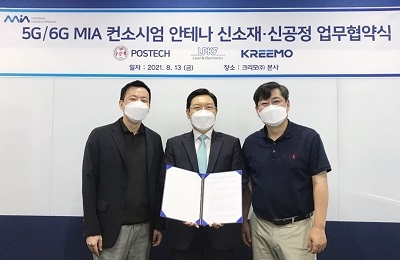
POSTECH signed a cooperative agreement with KREEMO and LPKF Laser & Electronics Korea (LPKF) on August 13 to establish a collaborative system for new materials and new manufacturing processes for 5G/6G antenna. The partnership will help to strengthen the mmWave Industry Alliance (MIA). 5G, which uses millimeter wave (mmWave), is a communication method for broadband transmission that not only provides fast wireless internet connection, but also used in industries such as self-driving cars, smart factories, and digital healthcare. In 2020, POSTECH formed the mmWave Industry Alliance (MIA), an open-consortium to build a 5G ecosystem and expand the 5G market. MIA plans to develop a 5G mmWave Golden Reference Device which would verify the performance of 5G devices and assist companies developing 5G devices by providing a standard against which to optimize 5G performance and to ultimately expedite their product launch. KREEMO, serving as the secretariat of MIA, is a 5G antenna venture company that developed the world's first 360-degree 5G antenna with beamforming technology in collaboration with POSTECH. As the expansion of 5G hampered by limited performance and cost of key components like the antenna, this new technology allows to eliminate 5G shadowing areas and reduce facility investment costs. In addition, if the new laser-based manufacturing process optimized for 5G antennas is implemented, it may be possible to produce more precise antennas in various forms than the conventional 5G antennas. LPKF is a leading company in laser-based solutions for the technology industry. Its laser system is a key component in manufacturing printed circuit boards, microchips, automotive parts, solar modules and many others. To this, POSTECH, KREEMO, and LPKF have come together to develop the core antenna technologies developed in Korea by using major 5G/6G antenna components by signing a mid to long term industry-academia partnership in new materials and processes. POSTECH professor Wonbin Hong who led the establishment of MIA remarked, “We expect MIA to be an important consortium that will strengthen the nation’s core technologies in 5G and lead the future 6G technology through maximizing the applications of high-frequency resources with much potential like the mmWave.”
2021.09.01 1810 -
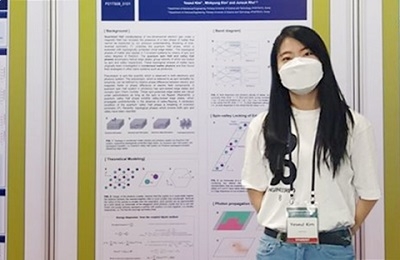
Yeseul Kim Wins Gold Medal at 'Nano Korea 2021'
Yeseul Kim, (Academic advisor: Professor Junsuk Rho of Department of Mechanical Engineering and Chemical Engineering) who is in the MS/PhD integrated program of the Department of Mechanical Engineering at POSTECH, won a gold medal at the ‘Nano Korea 2021’ organized by the Ministry of Trade, Industry and Energy and the Ministry of Science and ICT. Nano Korea 2021 is a symposium to promote nanoscale science and technology, to increase exchanges among researchers in relevant fields, and to materialize the results of research. In this symposium, one grand prize, two gold medals, and three silver medals were selected among general participants. A Kim’s paper, ‘Spin-valley Locked Edge States in Chiral Photonic Crystal’, has designed that the Spin-valley Locked Photonic Crystal with both quantum spin-hole and valley-hole effects, and proved that one-way photon transport by using multiple degrees of freedom based on the condition of spin and valley. Through this research, Kim was praised for opening up the possibility for highly efficient and powerful signal transmission, and was honored with the gold medal at Nano Korea 2021. "Thank you for giving me a great chance to present at this honorable academic conference," Kim said. "I will constantly do research to apply my research in various areas such as optical communication and topology spintronics."
2021.08.24 1880 -
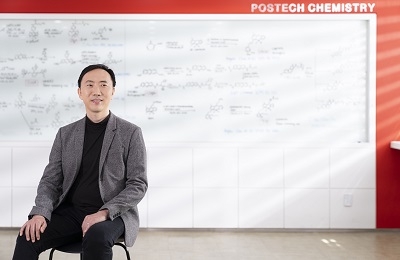
Professor Young-Tae Chang Appointed as Advisory Member of Angewandte Chemie
Professor Young-Tae Chang of POSTECH’s Department of Chemistry was selected as an International Advisory Board (IAB) member of Angewandte Chemie, the most authoritative journal in the field of chemistry. The Angewandte Chemie Council and the Executive Committee of the journal appointed 37 IAB members to best balance its board membership to ensure that the new IAB reflects the chemistry community, taking geography, gender, and career stage as well as groups that are currently underrepresented among the journal’s authors and reviewers and in chemistry. The IAB members will provide editorial review and advice for the journal. Professor Chang has garnered great attention from the global academic circles for organizing the identification of target proteins in cells, which has been a great challenge in chemical biology. He is known as the ‘florescent alchemist’ for putting together a ‘fluorescent library’ of ten-thousand fluorescent materials. Professor Chang his bachelor's, master's, and Ph.D. degrees at POSTECH and was invited to teach at New York University and National University of Singapore under exceptional conditions. He is currently a member of faculty at POSTECH’s Department of Chemistry and the Associate Director of the Institute for Basic Science (IBS). "We are excited to have Professor Chang newly elected as an IAB member. He will be an important asset to Angewandte Chemi to expand its range of fields including chemical biology," stated Angewandte Chemie.
2021.08.24 1939 -
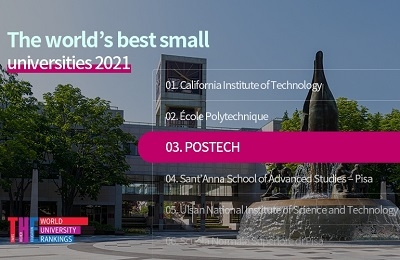
POSTECH Ranked as Third Best Small University for 3 Years
POSTECH has placed third on the 2021 World’s Best Small Universities list, marking its third year to win the title. The list is announced by the Times Higher Education (THE), a London-based leading publisher of higher education analysis and world university rankings. To be eligible for this annual ranking, universities must appear in THE’s World University Rankings 2021, teach more than four subjects, and have fewer than 5,000 students. The same 13 performance indicators across five categories are used for small-scale global university evaluations (as THE’s main global rankings) including teaching, research, citations, industry income and international outlook. To illustrate scale, the average number of students at an institution in the 2021 world’s best small universities ranking is 3,197 compared to the average number of students an institution in THE’s main global ranking is 25,000. Caltech defended its position as the best small university in the world for six consecutive years followed by École Polytechnique which has placed second for three consecutive years. POSTECH’s ranking is the highest among Asian universities again this year, and POSTECH and UNIST are the only two universities from South Korea that placed within the top five. THE indicated that POSTECH encourages entrepreneurship by “offering courses and opportunities for students to become entrepreneurs, such as taking part in clubs, start-up prep groups, training on patents and leaves of absence to create a new venture.”
2021.08.13 3139 -
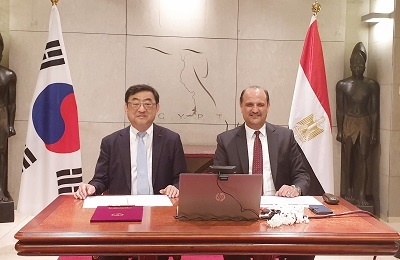
POSTECH to Train Egyptian AI Experts
POSTECH and Egypt’s Ministry of Communications and Information Technology (MCIT) held an online MOU signing ceremony to enter into partnership regarding DEBI Program. The ceremony was held at the Embassy of Egypt in Seoul on June 28, 2021 and attended by President Moo Hwan Kim and Professor Hwanjo Yu of POSTECH and H.E. Minister Amr Talaat of MCIT, H.E. Hazem Fahmy, the Egyptian ambassador to Korea, and H.E. Hong Jin-Wook, the Korean ambassador to Egypt. The main purpose of this MOU is to collaborate on the DEBI Program (Digital Egypt Builders Initiative Program), which is an educational initiative of the Egypt government to enhance the capacities of Egyptian students in the areas of Cybersecurity, AI & Data Science, IoT and Robotics. Through this partnership, POSTECH plans to offer a Master of Engineering Degree Program in AI & Data Science to outstanding Egyptian students in the future. “The Egyptian students of the DEBI program are entering POSTECH’s first online master’s program designed for students outside Korea. With this MOU, we agree to raise the next generation of global leaders together, who will serve their society, nation, and the world. We are honored to be Egypt’s partner with this common goal,” commented President Kim in his opening remarks. “I am proud that our DEBI is partnering with one of highest-ranking institutions globally, well renowned for its distinctive achievements in AI,” remarked H.E. Minister Talaat. He added, “Korea with its glamourous levels of technological and educational progress is a highly valued and esteemed partner.”
2021.08.10 1896 -
Professor Chulhong Kim’s Team Wins the 2020 Outstanding Paper Award
A POSTECH research team led by Professor Chulhong Kim (belonging to three departments of electrical engineering, mechanical engineering, and Convergence IT Engineering) was awarded the 2020 Outstanding Paper Award from Light: Science and Applications, an authoritative journal on optics published by Springer Nature. The 2020 Outstanding Paper Award is presented to an exceptional paper among all papers published in Light: Science and Applications in 2020 by evaluating their citation index and influence. The paper selected for the award is titled, “Super-resolution localization photoacoustic microscopy using intrinsic red blood cells as contrast absorbers,” published at the end of 2019 by Professor’s Kim’s research team. The team had developed a super-resolution localization photoacoustic microscopy that is 500 times faster than the conventional photoacoustic microscopies. The microscopy developed by the research team not only enables the use of existing photoacoustic microscopy using a galvanometer scanner, but it can also detect clogged or ruptured blood vessels by the flow of red blood cells in the body without using a contrast agent and has been recognized by academic circles and the medical community.
2021.08.03 1741 -
Change Up Ground Opens to Become Korea’s Silicon Valley
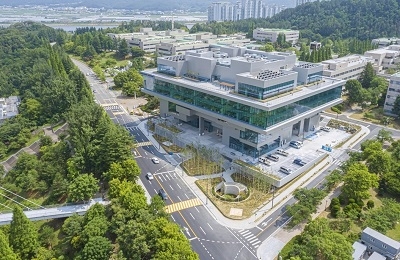
POSCO held an opening ceremony for the newly constructed Pohang Change Up Ground building at POSTECH on July 21, 2021. “The Pohang Change Up Ground has been built with the vision to create a Pacific Valley along with the Silicon Valley in the eastern Pacific region,” remarked CEO Jeong-Woo Choi of POSCO in his opening remarks. Pohang Change Up Ground, located on the POSTECH campus, has a total area of 28,000㎡ and houses 63 promising startups from various sectors such as machinery, materials, electrical and electronic engineering, semiconductors, IT and communication software, biomedical, chemical, and energy. POSCO plans to nurture the startup ecosystem in Pohang into a world-leading venture valley based on the strong industry-academia partnership worth two trillion won (USD 1.7 billion) in research facilities including POSTECH, RIST, the Pohang Accelerator Laboratory, and POSCO Technology Investment and 5,000 research experts. The ceremony was attended by Prime Minister Kim Boo-kyum, North Gyeongsang Province Governor Lee Cheol-Woo, POSCO CEO Jeong-Woo Choi, and other officials and representatives of the resident venture companies of the building.
2021.07.28 2222