News & Updates
-
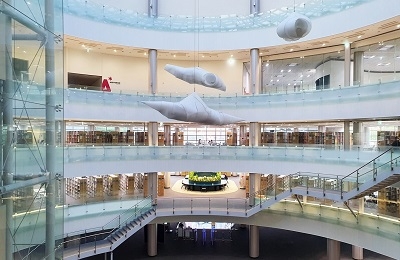
Tae-Joon Park Digital Library reopens after a year of renovations as a creative and collaborative space
On April 19, The Tae-Joon Park Digital Library re-opened after a year of renovations. The Tae-Joon Park Digital Library reduced its volume of books that are not commonly used, and transformed the place into creative and collaborative spaces. It newly designed the third to fifth floors by adding the concept of ‘Communication and Rest’ by decorating it like a lively living room at home. The library created a Collaboration Zone where noise is allowed, which breaks the stereotype of libraries, a Fun & Play Zone where visitors can play and enjoy, a studio equipped with filming devices, a control room and an editing room, learning nooks that secure personal spaces, and study rooms equipped with video conference systems. In addition, a cultural space will be built by the second half of the year and cultural events like ‘Humanities on the Road’ will be held for POSTECH members and the residents of Pohang. Currently, access to Tae-Joon Park Digital Library is restricted to off-campus visitors, but it will open to everyone including Pohang residents when social distancing is lifted. When the COVID-19 pandemic ends, visitors will be able to access the library with the daily pass without any additional applications in advance.
2021.04.22 1986 -
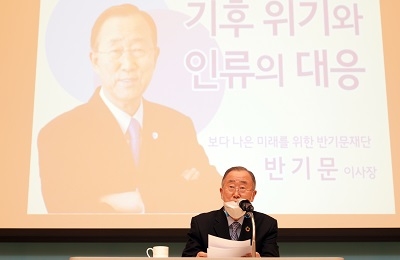
Former UN Secretary-General Ban Ki-moon Delivers a Speech at POSTECH
Mr. Ban Ki-moon, the eighth Secretary-General of the United Nations (UN) delivered a special lecture at POSTECH on April 15, 2021. It was the second lecture of the POSTECH Civilized Citizen Lecture Series, titled ‘Human Response to Climate Change’. Mr. Ban emphasized the need for urgent action to combat the climate change and its impacts based on his accumulative experience of serving at the UN for over a decade. Meanwhile, POSTECH Civilized Citizen Lecture Series has begun with a lecture by Son Sook on April 8 and is scheduled run until July 8, 2021. POSTECH Civilized Citizens Lecture is steadily gaining popularity even though the number of participants has been adjusted in compliance with social distancing guidelines due to COVID-19.
2021.04.20 1695 -
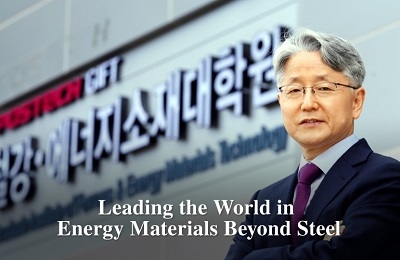
Leading the World in Energy Materials Beyond Steel
- An interview with Professor Sung-Joon Kim, the dean of Graduate Institute of Ferrous & Energy Materials Technology (GIFT) at POSTECH. - GIFT undergoes expansion to raise experts in energy materials, to contribute to Korea’s industries and become a leader in the advanced materials sector. POSTECH’s Graduate Institute of Ferrous Technology (GIFT), the world’s only graduate institute that trains experts in ferrous technology, has recently changed its name to Graduate Institute of Ferrous & Energy Materials Technology (acronym unchanged) to embark on a new journey. The expansion is to move away from education focused on steel and to cultivate experts in convergence technologies including energy materials, regarded as a key technology of the future. In 1994, POSTECH founded the Graduate School of Iron and Steel Technology (GSIST) focusing on master’s programs to implement commissioned and retraining programs for employees from steel companies. Meanwhile, Korea welcomed an era of cutting-edge industries such as electronics and displays beyond just materials. POSCO, faced with a brain drain, set up a strategy to become the world's number one steel company. That very strategy was embodied in the Graduate School of Ferrous Technology (GIFT) which opened in 2005 to attract talented individuals for R&D. GIFT established research labs in ten areas most essential to the steel industry at the time to lay down the foundation for nurturing professionals. GIFT astonished the world by bringing in scholars to Pohang from countries with advanced steel competencies like the United Kingdom, Belgium, Japan and France. "Since its establishment, GIFT has provided world-class education and research on ferrous technology and structural metal materials in close cooperation with POSCO,” explained Sung-Joon Kim, the dean of GIFT. He added, “As energy becomes more important, such as the recent rise in environmental issues, GIFT has decided to prepare for that future in tune with the change.” ◆ Fostering professionals in energy materials Energy technology is vital to humanity and a key sector of future technologies. Therefore, POSTECH plans to prepare by expanding the scope of education to energy technology beyond steel. Since POSTECH and POSCO have worked together for a long period time, POSTECH will contribute its strength by cultivating professionals in line with POSCO's pursuit of rechargeable batteries. On the reason why he introduced an education system on secondary batteries at GIFT, Professor Kim explained, “GIFT has achieved world-class success in developing new steel alloys and production processes for the past 15 years.” He added, “Based on the well-established industry-academia cooperation model, it was judged to be suitable for nurturing professionals in secondary battery industry. Armed with this mission, four students have started at the new GIFT this month. In addition to faculty who are already studying secondary batteries at POSTECH, five additional full-time faculty members will be recruited in the energy materials field (anode and cathode materials, and next-generation batteries, etc.). The enrollment quota will also be increased to 15 (10 master’s and 5 doctoral) students. "As we did in the early days of establishing GIFT, we are working hard to recruit the most qualified experts at home and abroad as we expand into the energy materials sector,” explained Professor Kim. “More students will be recruited in the second half of the year allowing a full roll-out of the program in the fall.” ◆ Leading the future advanced materials industry Recently, the city of Pohang selected rechargeable batteries, biomedical, and artificial intelligence sectors as key future industries. In light of this, GIFT plans to strengthen its cooperation with regional governments. Starting this year, GIFT has conducted projects with steel SMEs in the Gyeongsangbuk-do region and will be expanding its scope to secondary batteries. In addition, GIFT will foster student start-ups considering the fairly short lead-up time from R&D to commercialization in the energy materials sector. “Korea’s regional cities are facing depopulation crisis,” remarked Professor Kim. "As GIFT is located in Pohang, we want to play a role in bringing people to the region and revitalizing it." In closing, Professor Kim expressed that the strategy for the new GIFT is ‘first mover’. GIFT aims to contribute to the national industries by cultivating professionals in convergence studies dealing with energy, steel, and AI. “This is just a start,” he remarked. “We will lay down strong groundwork to become an industry leader in advanced materials.”
2021.04.09 1893 -
POSTECH Selected as Leading Agency for 2021 Start-up Leap Package
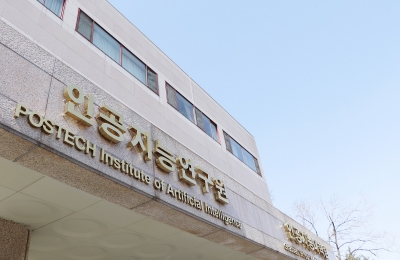
POSTECH has been selected as the leading agency for the 2021 Start-up Leap Package project for Daegu City and Gyeongsangbuk-do Province. The project, organized by the Korea Institute of Startup & Entrepreneurship Development of the Korean Ministry of Small and Midsized Enterprises and Startups (MSS), is to support the sales and job-creation of innovative start-ups in their leap stage. The project period is 2+2 years and the budget is 7 billion won (about $6.1 million) per year. The leading agency should be a university or public or private institution with specialized technology, infrastructure, and cooperative networks that can drive innovative growth and produce tangible results of start-ups in their leap stage (three to seven years since founding). POSTECH has been selected as the leading agency for its outstanding research achievements, superb start-up education programs, experiences in fostering many prominent startups like Genexine and Cafe 24, and establishing a close collaboration with local governments and industries. POSTECH is planning to establish a Start-up Leap Supporting Center at the Institute of Artificial Intelligence, and create and operate the Scale-up Most Valuable Platform. In addition, POSTECH will work with 14 organizations including Gyeongsangbuk-do province for scaling up the start-ups by finding superior enterprises, operating specialized programs, and providing investment.
2021.03.26 1680 -
2021 PIURI Postdoctoral Fellowship Awarded
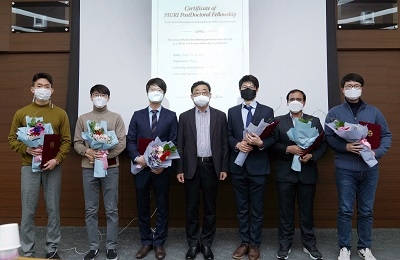
POSTECH has selected and awarded six recipients of the 2021 PIURI (POSTECH Initiative for fostering Unicorn of Research & Innovation) Postdoctoral Fellowship. Following the five recipients awarded in 2020, the six PIURI fellowship recipients for the first half of 2021 are: Dr. Sanghyun Rah (Academic advisor: Prof. Minju Shon) of Department of Physics, Dr. Jaeyong Park (Academic advisor: Prof. Jonglam Lee) of Department of Materials Science & Engineering, Dr. Anupam Giri (Academic advisor: Prof. Unyong Jeong) of Department of Materials Science & Engineering, Dr. Dasol Lee (Academic advisor: Prof. Junsuk Rho) of Department of Mechanical Engineering, Dr. Insang You (Academic advisor: Prof. Yong Young Noh) of Department of Chemical Engineering, and Dr. Wonseok Choi (Academic advisor: Prof. Chulhong Kim) of Department of Convergence IT Engineering). PIURI Postdoctoral Fellowship was initiated to support the research activities of exceptional postdoctoral researchers at POSTECH and to foster capable research leaders. The initiative was created in the second half of 2020. Any research associate or research faculty of any nationality are eligible given that they have obtained their Ph.D. degree within the past seven years. Those selected for the PIURI Postdoctoral Fellowship will receive up to 87 million won per year (maximum 25 million won per year) for two years including tuition support, department support, and tuition matching support, and are eligible to reapply for the fellowship if requirements are met.
2021.03.11 1997 -
2021 POSTECH Matriculation Ceremony Held Online
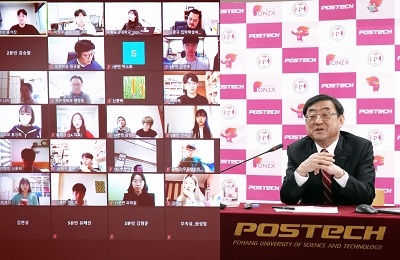
POSTECH held its 2021 Matriculation Ceremony on February 19 to kick off its new academic year. It was hosted online to prevent the spread of COVID-19 this year. President Moo Hwan Kim welcomed the enrollment of new students to POSTECH, and gave a brief speech about POSTECH’s operations and shared his vision. After President Kim’s speech, Chairman Sang-tae Park of the POSTECH Alumni Association gave his congratulatory remarks. Seokchan Hong, the freshmen representative, continued by sharing his commitment and determination with his fellow incoming Postechians. A brief Q&A session was held for the freshmen and their parents to wrap up the ceremony. Prior to this, POSTECH provided opportunities for freshmen to understand and enrich their campus experience by hosting welcome events through Freshmen Orientation which was held online. POSTECH confirmed to conduct all of its classes remotely for the 2021 academic year and will begin its first semester on February 22, earlier than other universities.
2021.02.23 1953 -
POSTECH Holds 2021 Town Hall Meeting
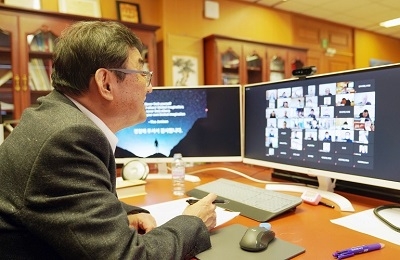
With the COVID-19 pandemic continuing on for more than a year, POSTECH held a town hall meeting where members came together to connect with each other and to cultivate an active communication culture at POSTECH. The town hall was held at 4pm on February 8 and lasted about an hour. It was attended by more than 150 members of the POSTECH community, including former POSTECH president Chan-Mo Park, professors, undergraduate and graduate students, researchers and staff members. President Moo Hwan Kim began this first town hall meeting with introductions to POSTECH’s current state then fielded questions from participants and exchanged candid thoughts. In particular, he answered questions about a diverse set of issues facing senior management, including plans regarding the establishment of a medical school, the utilization of university spaces, direction of government-funded departments such as WCU, supporting student start-ups and graduate students. Participants evaluated this meeting positively, that it was a good platform to share opinions freely, learn about pending issues, and think collectively without restrictions on form or topic. POSTECH will continue to hold regular or sporadic town hall meetings to share information about POSTECH’s direction and to encourage more open communication and mutual understanding. If the COVID-19 situation improves, POSTECH plans to hold in-person town hall meetings in a small party format or serve refreshments.
2021.02.17 1973 -
STEM Students Turn into Science Fiction Writers
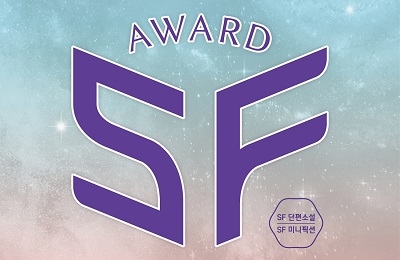
- Ha-jin Lee’s The Continuity of Someone and Kyung-man Park’s Eclipse selected as winners of POSTECH Science Fiction Award - “The strength of STEM students lies in depicting the scientific and technological details,” remarked Cho-yeop Kim, one of the judges of the contest. The winners of the 1st POSTECH Science Fiction Award, hosted by POSTECH, were announced on January 28, 2021. The Continuity of Someone, a short-fiction written by Ha-jin Lee (penname), a second-year student majoring in physics at the Kyungpook National University, was selected as the winner. For the flash fiction category, Kyung-man Park’s Eclipse was selected. Park is a second-year student studying electrical and computer engineering at Seoul National University. The POSTECH Science Fiction Award, Korea's first SF contest for science and engineering students, is designed to provide opportunities for students to develop their sensitivity in the humanities through writing and to communicate with society. The contest received great attention from STEM students since its inception as students from various backgrounds at home and abroad submitted their work. From September to December 2020, a total of 85 short fictions and 98 flash fictions were received, and the final winners were selected on January 28, 2021 after preliminary and final rounds. Besides the prizewinning works, a KAIST computing master’s student Soo-jin Hwang’s Hole was selected as the runner-up in the short-fiction category and SeoulTech electronic engineering master’s student Han-na Lee’s Technology Makes People was selected as the runner-up for the flash fiction category. The judges of the contest were writers Cho-yeop Kim and Bora Jung, and book critic Sang-joon Park, all representing Korea’s science fiction field. In her written interview with the organizer of the contest, Communication and Public Discourse Institute at POSTECH, Cho-yeop Kim stated, "The strength of STEM students lies in their depiction of the scientific and technological details when writing science fiction.” She added, “But at the same time, they should be careful not to let their scientific knowledge restrict their imagination.” She hoped that the POSTECH Science Fiction Award will become a great opportunity for STEM students who wish to take on new challenges. Winners of the short fiction and flash fiction categories will receive 5 million won and 3 million won each, while runners-up will receive 2 million won and 1.5 million won each along with the POSTECH President Award certificate. POSTECH Communication and Public Discourse Institute, the organizer of the contest, plans to publish a collection of the winning works with Hubble, a prominent publishing company specializing in science fictions.
2021.02.03 1850 -
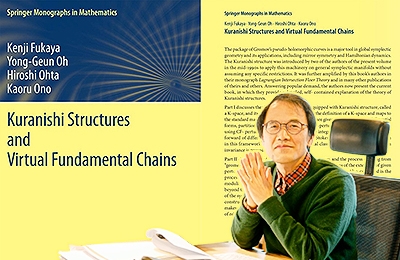
Professor OH Yong-Geun (IBS Center for Geometry and Physics) Published a New Book on Kuranishi Structure
Professor OH Yong-Geun’s new book, <Kuranishi Structure and Virtual Fundamental Chains> has been recently published by Springer, an esteemed publisher of many peer-reviewed journals including Nature. The new book was co-authored by OH Yong-Geun (Institute for Basic Science & POSTECH), Kenji FUKAYA (Simons Center for Geometry and Physics & Stony Brook University), Hiroshi OHTA (Nagoya University), Kaoru ONO (Research Institute for Mathematical Sciences & Kyoto University) as a series of Springer Monographs in Mathematics. This book lays the foundation of the Kuranishi structure. Professor OH explained, “The structure is needed to implement the study of the moduli space of pseudo-holomorphic curves into the construction of A∞ structures associated with general Lagrangian submanifolds and their deformation theory. The book is expected to be useful in other moduli problems that arise from geometry and physics beyond pseudo-holomorphic curves.” The package of Gromov’s pseudo-holomorphic curves is a major tool in global symplectic geometry and its applications, including Gromov-Witten invariants, mirror symmetry and Hamiltonian dynamics, as well as being the mathematical representation of open-closed type IIA string theory. The Kuranishi structure was introduced in 1999 by two of the authors of the present volume, Kenji Fukaya and Kaoru Ohno, to apply this machinery on general symplectic manifolds without assuming any specific restrictions. The topic was further expanded by this book’s authors in their monograph <Lagrangian Intersection Floer Theory> as well as numerous other publications on the topic that are written by themselves and others. Professor OH said, “We now present this book, in order to answer the popular demand for a detailed, self-contained explanation of the theory of Kuranishi structures, which can be extended to other moduli problems in geometry and physics. We hope that this book can serve as a valuable tool for other mathematicians in the related fields.” The book has been published on November 2020, and it can be purchased from various online platforms including Amazon.
2021.01.18 1940 -
POSTECH Professor Chulhong Kim Elected as SPIE Fellow
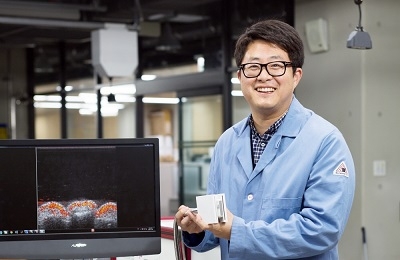
Professor Chulhong Kim of the Department of Creative IT Convergence Engineering was selected as Fellow of the Society of Photo-Optical Instrumentation Engineers (SPIE) on January 11, 2021. He was selected as a fellow in recognition of his contribution to the next-generation photoacousticᆞultrasound fusion video system research. Professor Kim, who received his Ph.D. from Washington University in St. Louis, taught at State University of New York before joining the POSTECH faculty in 2013. He has developed and commercialized the next-generation IT convergence medical imaging technology using optics and ultrasound, and has been drawing attention as a leading scholar in the field for his interdisciplinary research on chemistry, materials, and medicine. In 2018, Professor Kim founded a startup Opticho, Inc. and successfully developed the next-generation photoacoustic microscopy. In 2020, he won the Microcopy Today Innovation Award, and the University-Industry (POSTECH-Opticho) Project Challenge Award from the Korean Ministry of Trade, Industry, and Energy. The Society of Photo-Optical Instrumentation Engineers (SPIE) was established in 1955 and has accumulated over 250,000 members from 183 countries so far in various fields including optics, optical electronics, photonics, and optical applications.
2021.01.13 1889