News & Updates
-
Professor Seung-Woo Lee’s Research Wins the 2020 Excellence Award from the Ministry of Education
The research project of Professor Seung-Woo Lee of POSTECH’s Department of Life Science was selected as the 2020 Excellence Award from Korea’s Ministry of Education. Korea’s Ministry of Education selected the 50 excellent academic and research projects of 2020 and held the award ceremony at the National Research Foundation’s headquarters in Daejeon on December 17. Since 2006, the Ministry of Education has been announcing outstanding achievements every year to publicize the accomplishments of its academic research support projects that have contributed to advancing academics and solving social problems. This year, 156 out of 21,505 academic and research projects conducted in 2019 were reviewed by evaluators consisting of experts in each field of study. Through this, 30 outstanding projects in the field of humanities and society, 5 in the field of Korean studies, and 15 in the field of science and engineering have been chosen as winners. Professor Lee’s research, which was selected as an outstanding achievement in the field of science and engineering, revealed that the microbial signals in the intestines are transmitted across the intestines to the whole body and that they produce immune cells by controlling the hematopoietic action in the bone marrow without causing excessive inflammatory reactions under normal conditions. During this process, microbial signals containing the DNA of intestinal microorganisms are transmitted through the bloodstream to the bone marrow and recognized by CX3CR1+ to interact with hematopoietic cells, and the mechanism was identified for controlling systemic responses in normal intestinal microbial signals. This research result was highly praised for providing important clues to the fundamental question of how the microorganisms in the intestine affect the control of immune homeostasis in various tissues, and even in diseases like cancer.
2020.12.28 1713 -
Professor Namyoon Lee Wins the IEEE ComSoC Outstanding Young Professional Award
Professor Namyoon Lee of POSTECH’s Department of Electrical Engineering has won the Outstanding Young Professional Award from the Communications Society (ComSoc) of IEEE, the largest academic organization in electrical and electronic technology. This award is awarded to young researchers who have contributed greatly to the field of telecommunications for 15 years after completing their undergraduate studies. The winners were announced at the IEEE GLOBECOM 2020 Rising Stars of ComSoc event. ComSoc is a leading academic society in telecommunications. Professor Lee is currently serving as an editor of notable journals of IEEE ComSoc, including IEEE Transactions on Wireless Communications, IEEE Transactions on Communications, and IEEE Communications Letters, and for IEEE Transactions on Vehicular Technology of Vehicular Technology Society. In addition, he has published about 110 papers on 4G/5G/6G multi-antenna transmission and reception technology and has about 40 domestic and international patents over the past 15 years. He remains actively engaged in research and has recently published a book on 5G/6G core technology and standard technology called 5G and Beyond: Fundamentals and Standards with Springer Publishing. Meanwhile, Professor Lee is drawing attention in wireless communication theory and statistical signal processing and was selected as the winner of IEEE ComSoc Asia/Pacific Outstanding Young Researcher Award in 2016, which is awarded to researchers under the age of 35 with outstanding research achievements in the Asia-Pacific region.
2020.12.23 1927 -
POSTECH’s Admissions Interview Moves Online
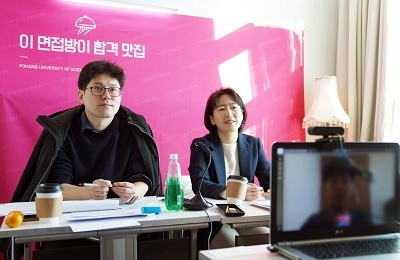
[POSTECH’s admissions interview conducted online from December 5 – 6. Candidates show high rate of satisfaction thanks to POSTECH’s meticulous preparation] With the College Scholastic Ability Test (CSAT) done, college admissions process has begun in Korea. With the recent surge of COVID-19 cases among university students, the Ministry of Education has designated an “intensive university evaluations management period" until December 22 to conduct admissions exams and interviews and recommended universities to switch to non-face-to-face process except under inevitable circumstances. As POSTECH selects students through rolling admission, it conducted its online admissions interviews on December 5 and 6. With the wide spread of COVID-19 around the CSAT this year, university districts across the country were on high alert ahead of the admissions interviews. In the midst of this, POSTECH successfully conducted the interviews virtually, setting a precedent for a new interview standard. POSTECH had already set plans and begun preparing for the online admissions interview process in early August. It selected a video conferencing platform proven to be stable after running four months of tests. It also prepared programs that preceded the interviews such as online meetings, virtual campus tours and messages from POSTECH students. As candidates would connect to the platform at the same time from all over the country, POSTECH prepared for unexpected situations that can occur depending on the users’ network settings. For example, when the network was disconnected during an interview, it was continued through a video call on the Android phone and iPhone provided in the interviewers' room. In fact, the rate of no-show this year was 4.2 percent, which was lower than last year’s 5.5 percent. This was due to POSTECH overcoming its regional limitations and increasing online accessibility. "Although we could not provide the same environment for all candidates since it was held online, it was important to ensure that everyone conducts the interview in a stable environment,” remarked Sung-ik Son, the director of Admissions at POSTECH who prepared the online admissions process. "This was a great challenge that confirmed that the online interviews can be a real-time interview system in the COVID-19 era.” Not only the format but also the content of the interview was changed. Experienced interviewers with good understanding of the admissions process were selected for the two days. Also, the parts asking for mathematical and logical thinking and problem-solving skills were eliminated to fundamentally block the leakage of the questions. Instead, more individualized questions that focus on each candidate were added. Professor Joon Won Kim, who participated as an interviewer, commented, "The motto of this admissions interview was to be safe and friendly, and to verify with certainty.” He added, "I think the candidates were able to promote themselves without being nervous in the safest environment.” He stated, “If the in-person interviews had solely focused on the candidates’ attitude at the given moment, these virtual interviews revealed more about the candidates, such as their thoughts and actions through the cover letters and their extracurricular activities.” Candidates who participated in the online admission interviews generally responded positively by saying in their reviews, "I had enough time to convey myself and felt that the interviewers understood my thoughts very clearly," "I thought that real talent would be recruited since they focused on character and aptitude rather than just scientific competence," and "I felt that all interviewers read the applications carefully and prepared well for the questions.” POSTECH selects freshmen through the Comprehensive School Report Admission System and rolling admissions. In the first round of document evaluations, students' potential and academic abilities are assessed by comprehensively considering their school records, cover letters and recommendation letters. The second round of interview evaluation is conducted for a pool of candidates three times the number of candidates who passed the document round. Here, 67% of first and 33% of second round evaluations are reflected. As interviews are a critical part of the admissions process, POSTECH's efforts and preparation for them are meticulous. It is largely divided into two parts: Since POSTECH selects all students in a single category, there is a part that tests the candidates’ mathematical and logical thinking and problem-solving skills, and a character interview. Since the interview is an important process to evaluate the candidate in person, it not only focuses on the student's answers to a given question, but also evaluates their attitude and communication skills, their potential and creativity overall. As it was held online this year, more weight was placed on the character interview.
2020.12.18 1938 -
Professor PooGyeon Park Wins the 2020 Korea Engineering Award
Professor PooGyeon Park of POSTECH’s Department of Electrical Engineering has won the 2020 Korea Engineering Award. Professor Park has achieved outstanding research results related to time delays caused by transmission speed constraints in wired and wireless systems of electronic devices. In particular, he opened the door for research on applying the theory of robust control to optimization techniques by proposing a meaningful numerical approach for the first time. In addition, he has garnered attention in both the academic circles and from industry with his excellent research findings, such as proposing ways to greatly improve the problem of computation that accompany the numerical approaches. He received this year’s Korea Engineering Award for providing a theoretical background for interpreting and designing the system in consideration of various time delay factors that inevitably exist in virtual physics, smart grids, remote diagnosis and control, and virtual reality, which are the key industries of the Fourth Industrial Revolution. Professor Park graduated from Seoul National University and received his Ph.D. from Stanford University before joining as a professor at POSTECH in 1996. He has been recognized for his outstanding research achievements and received numerous awards including the IJCAS Outstanding Service Award, IROS Academic Research Award, ICMIT 2015, 2017 ICCAS, and the IEEE ICA-SYMP 2019 Best Paper Award. The Ministry of Science and ICT announced that it has selected eight recipients for this year’s presidential awards, including the Korea Science Award, the Korea Engineering Award, and the Young Scientist Award, in consultation with the National Research Foundation of Korea and the Korean Academy of Science and Technology.
2020.12.18 1885 -
POSTECH Professor Junsuk Rho Receives the Micromachines 2020 Young Investigator Award
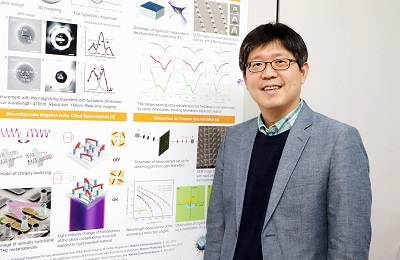
Professor Junsuk Rho of the departments of mechanical engineering and chemical engineering at POSTECH received the 2020 Young Investigator Award from Micromachines, a journal published by the Swiss-based publishing company MDPI. The award was established for the first time this year and is awarded to researchers under the age of 40 in micro- and nanotechnology fields who have demonstrated strong influence and outstanding achievements. Prof. Rho is an internationally renowned young researcher recognized for his research on metamaterials that show the characteristics of light optics not present in nature. This year, he was the first Korean to win the MEE/MNE Young Investigator Awards and Lectureship 2020, and received the Young Scientist Award from Microsystems & Nanoengineering’s MINE conference. Prof. Rho was selected as the recipient of the Micromachines 2020 Young Investigator Award for leading the research of active devices using various external stimuli beyond the limits of passive devices, which were the limitations of existing metamaterials. As the winner, he will receive the prize money and a plaque and will be invited to publish the award-winning paper in the journal.
2020.12.14 1733 -
2020 POSTECH Global Sports AIX Conference Successfully Held
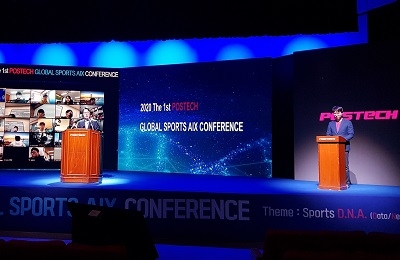
– Conference introduced advanced research under the theme of Sports “DNA” (Data/Network/AI) – The online international conference was broadcast live with participation from leaders around the world. The 2020 POTECH Global Sports AIX Conference was held virtually at the POSTECH Auditorium on December 3, 2020. The conference was organized by the POSTECH Sports Industry Support Center and the Sports AIX Convergence Graduate School, and sponsored by the Ministry of Culture, Sports and Tourism and the Ministry of Science and ICT. Held at a Korean engineering university for the first time, the conference was organized under the theme of sports industry, which is drawing attention as a new growth area in the fourth industrial era, with participation from a number of world leaders from global IT companies like Google and from academia. At the conference, leading international studies related to sports data and artificial intelligence were presented to explore the direction of development of new sports convergence industries together through discussions on technology issues in sports data, network, and AI. Additionally, policy discussions on the sports IT industry were held ahead of the post-COVID era. The conference served as a new platform for the field of sports engineering by actively exchanging the latest research at home and abroad related to cloud technology for sports data analysis, video neural network AI technology, and wearable sensors. The event was held in compliance with guidelines to prevent the spread of COVID-19 and many participants in Korea and abroad participated in the online live broadcast in real-time. Prof. Young-Seok Kim, the organizer of the conference and the head of Korea Sport Industry Development Institute (KSIDI), remarked, "Through this international conference, we forecast a positive outlook for the future of the sports convergence industry, which is facing rapid changes and challenges.” He added, “As the central organization that will lead the innovation of the new sports IT industry, we plan to expand our creative role and global research cooperation in the future.”
2020.12.13 1635 -
POSTECH Professors PooGyeon Park and Jie-Oh Lee Inducted into the Korean Academy of Science and Technology
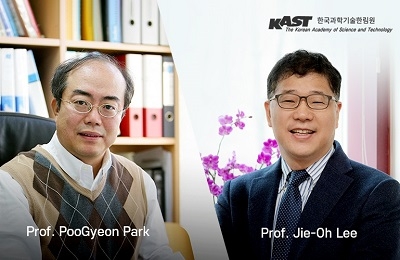
POSTECH professors PooGyeon Park of Department of Electrical Engineering and Jie-Oh Lee of Department of Life Sciences have been appointed as members in the Korean Academy of Science and Technology (KAST), the nation’s premier academic institute in science and technology. Inducted as a member in the Engineering Division of KAST, Professor PooGyeon Park was recognized for his outstanding research results on the study of time delay caused by the limitation of transmission speed in wired and wireless systems. He also proposed a meaningful numerical approach for the first time which opened the way for research in applying the robust control-based theory on optimization techniques. In particular, he was highly praised for providing a theoretical background for interpreting and designing control systems in industrial workplaces. In the Science Division, Professor Jie-Oh Lee was acknowledged for studying the combination of TLR receptors and microbial molecules, which play a key role in causing immune responses. Professor Lee revealed how new drug candidates for curing sepsis suppress the activity of TLR receptors and published exceptional research results, including the discovery of the mechanism by which microbial infectious agents disrupt our immune system for the first time through a protein complex structure study. With these accomplishments, he was credited with contributing to the scientific development of Korea and playing a major role in fostering the next generation. The National Academy of Science and Technology (KAST) is the nation’s most prestigious academic institute in science and technology fields. It selects scientists and engineers who have been active for more than 20 years that have obtained pioneering research achievements and contributed to the development of their field through three rigorous screening stages. A total of 30 new inductees were selected for the year 2021 at the 2020 1st General Assembly on November 26, 2020.
2020.12.04 1774 -
Minkyung Kim Receives the Outstanding Female Graduate Student Award from The Korean Physical Society
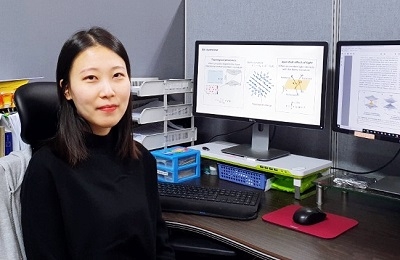
Minkyung Kim (Academic advisor: Professor Junsuk Rho), who is in the MS/PhD integrated program of the Department of Mechanical Engineering at POSTECH, won the Outstanding Female Graduate Student Award from the Korean Physical Society. This award is given to a promising female graduate student who has published outstanding papers in prominent domestic and international journals while working toward a degree.It is awarded to less than two winners a year and is very selective. Kim drew attention for her research that explores the new phase optics phenomena using meta-materials and photonic crystals. She was selected as an up-and-coming female scientist in recognition of her work including “Extremely Broadband Topological Surface States in a Photonic Topological Metamaterial” published in Advanced Optical Materials in 2019 and “Topologically nontrivial photonic nodal surface in a photonic metamaterial” that was published in Physical Review B in 2020 among numerous other papers that were published in authoritative journals.
2020.12.01 1947 -
POSTECH and SK Hynix Open an AI Collaboration Center Together
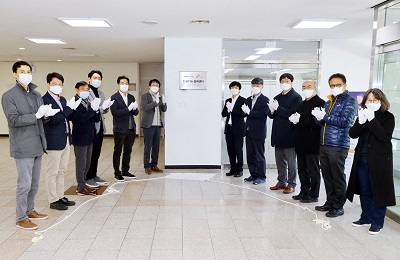
[The center will strengthen AI research collaboration through sharing analysis infrastructure, nurturing specialists and reinforcing problem-solving skills.] On November 23, POSTECH held an opening ceremony for the new POSTECH-SK Hynix AI Collaboration Center (AICC) at the POSTECH Institute of Artificial Intelligence (PIAI). The ceremony was attended by Youngjoo Suh, the dean of POSTECH’s Graduate School of Artificial Intelligence (GSAI) and director of POSTECH Institute of Artificial Intelligence (PIAI), Sang Woo Kim, the executive director of POSTECH’s Research and Business Development Foundation, and Changrock Song and Chanjin Park, the head of data transformation and head of data science at SK Hynix among other guests. AICC will analyze data accumulated at companies and research the AI technology that can find optimal solutions to solve issues. With the opening of the center, SK Hynix will provide unprocessed data and POSTECH’s GSAI and PIAI will gain a research opportunity to solve problems that arise in real-life in industries. In turn, SK Hynix will raise AI experts in the semiconductor field who are trained in data science while applying research results directly to current business. Starting immediately in December this year, the AICC is planning to select projects and conduct research on AI technologies crucial to the semiconductor industry. Youngjoo Suh, the dean of POSTECH’s GSAI remarked, “Through the POSTECH-SK Hynix AICC, we shall have a place to apply the AI technology to real issues arising in industries and solve them to create bigger value and gain a competitive edge in AI.”
2020.11.27 1971 -
Professor Wonyong Choi Selected as a Highly Cited Researcher for Two Consecutive Years
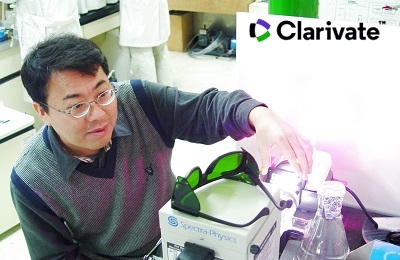
[Three POSTECH alumni including professors Oh-Min Kwon, Ju Hyun Park, Sangmoon Lee also made the list] Professor Wonyong Choi of POSTECH’s Division of Environmental Science and Engineering and Department of Chemical Engineering was selected as one of the most influential researchers in the world for two consecutive years. Clarivate Analytics, an information analytics company, analyzes the number of paper citations using the Web of Science data to identify the top 1% of the most cited researchers. Clarivate recognizes these researchers as Highly Cited Researchers and releases the list annually. Professor Wonyong Choi has strengthened the fundamentals of environmental and energy technologies using photocatalysts by developing a new variety of them and systematically researching their characteristics and reaction mechanisms. He is particularly drawing attention from global academia for his pioneering work in the field of environmental chemistry by developing a new advanced oxidation technology and identifying a new chemical phenomenon of ice. Professor Choi made headlines this year when he was appointed as the founding editor-in-chief of the journal ACS ES&T Engineering in March. He was also elected as an advisory panel for the journal Nature Sustainability in August and won the Doosan Yonkang Environmental Academic Award from the Doosan Yonkang Foundation in November. In the past, he has won the Korea Engineering Award in 2018 and the Korean Society of Environmental Engineers’ Academic Award in 2019 for strengthening the foundation of environmental and energy industries using photocatalysts. Meanwhile, three POSTECH alumni – Professor Oh-Min Kwon of Chungbuk National University, Professor Ju Hyun Park of Yeungnam University, and Professor Sangmoon Lee of Kyungpook National University – were also selected as Highly Cited Researchers of 2020.
2020.11.25 1855