News & Updates
-
The Next Generation 5G Consortium Founded
[The world’s first open consortium to build 5G ecosystem and expand 5G business] 5G, which uses the millimeter wave (mmWave), is a communication method that enables broadband transmission that not only provides fast wireless internet connection, but also applies to industries such as self-driving cars, smart factories, and digital healthcare. With the commercialization of 5G in 2019 around the world, it is expected that much more innovative “killer applications” will emerge in 2021 when the mobile carriers at home and abroad complete the verification of relevant technologies. In light of this, eight institutions – POSTECH, KREEMO, SK Telecom, Dongwoo Fine-chem, Corning, Y-Tech, Keysight Technologies, and Ansys – have come together to form an open-consortium called the mmWave Industry Alliance (MIA) for the market revitalization and ecosystem creation for the 5G industry. Although the launch of 5G-enabled communication devices has garnered constant attention since 2019, this move is drawing attention from academia and industry as there are currently no standards to verify its performance. MIA plans to develop 5G mmWave golden reference devices that can verify the performance of 5G devices and to help companies developing 5G devices compare and evaluate their performance and quickly launch products with the best performance. Member organizations anticipate that this will contribute to vitalizing the 5G markets including autonomous driving, smart city, augmented and virtual reality. POSTECH professor Wonbin Hong, who is leading the formation of MIA, remarked, "We expect MIA to be an important consortium that will strengthen the national core technologies in 5G and lead the future 6G technology through maximizing the application of high-frequency resources with much potential like the mmWave.” John Joonho Park, the CEO of KREEMO which is a 5G antenna venture company that will serve as the MIA secretariat, stated, "We will contribute to building the 5G ecosystem and the vitalizing the markets by applying the world's first 360-degree 5G antenna solution to the 5G mmWave standard samples." "Simulation in developing and certifying 5G mmWave device has become essential,” commented Seok hwan Moon, the general manager of Ansys Korea. "We will provide full support for the growth of the 5G industry through the Ansys simulation solution, which is recognized as a global golden standard." "Keysight has a variety of mmWave designs and measurement solutions, and we will support test solutions for the development and verification of innovative mmWave 5G solutions," added Keum-Chul Shin, the district manager for sales and engineering of Keysight Technologies Korea.
2020.11.24 1574 -
Professor Wonyong Choi Wins the Doosan Yonkang Environmental Academic Award
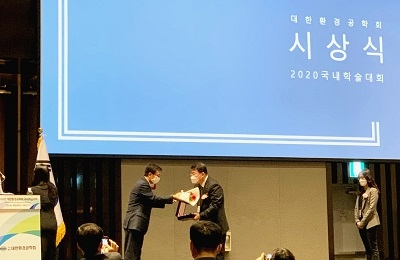
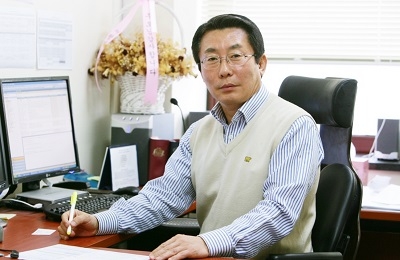
Professor Wonyong Choi – of POSTECH’s Division of Environmental Science and Engineering, and Department of Chemical Engineering – won the Doosan Yonkang Environmental Academic Award from the Doosan Yonkang Foundation. Professor Choi was selected as the winner of this award for his contribution to developing a new photocatalyst air purification technology by publishing a paper on the development of indoor air purifiers using titanium dioxide nanotube photocatalytic filters. He has also won the Korea Engineering Award in 2018 and the Korean Society of Environmental Engineers’ Academic Award in 2019 for strengthening the foundation of environmental and energy technologies using photocatalysts. The awards ceremony took place on November 11 at the Korean Society of Environmental Engineers conference held at the Shinhwa World on Jeju Island.
2020.11.17 1515 -
The World's Only Graduate Institute of Ferrous Technology Reborn as a Global Education and Research Hub
[POSTECH’s GIFT renews as Graduate Institute of Ferrous & Energy materials Technology and plans to add more faculty and more students] POSTECH Graduate Institute of Ferrous Technology, the world's only graduate school specializing in steel, has expanded and reorganized into the Graduate Institute of Ferrous & Energy materials Technology by adding the discipline of energy materials. Accordingly, the Graduate Institute of Ferrous & Energy materials Technology will conduct convergence education and research in high-tech metal and energy materials. In addition, as the fields of study expand, the school plans to recruit five tenure-track faculty members in the energy materials field (in positive and negative electrodes materials development, next-generation batteries development, and process improvement), while increasing enrollment by 15 (10 master’s and 5 Ph. D.) students. Freshmen majoring in energy materials will be admitted in the first semester of 2021 and the application process will take place in December. It is anticipated that they will become professionals in the secondary battery materials and will enter companies related to the field. The curriculum will also change substantially. In steel-oriented curriculum, it will provide opportunities for convergence study, including secondary battery operation, design of anode materials, and other courses on energy materials. POSTECH’s Graduate Institute of Ferrous Technology, established in 1996, has so far carried out the highest level of education and research in the field of steel and structural materials in Korea as well as in the world under a close industry-academia cooperation system with POSCO. However, in light of the increased significance of research on material components due to the rapid rise of environmental problems and the development of the energy industry, the school decided to incorporate energy materials for sustainable growth. Sung-Joon Kim, the dean of POSTECH Graduate Institute of Ferrous & Energy materials Technology remarked, "Innovation that changes future materials will start from convergence between high-tech materials and the school has adopted the first mover strategy as its future blueprint to create new high-tech material areas through convergence.” He added, "We will lead the industrial ecosystem through convergence research and education between steel, advanced metal materials, and energy materials."
2020.11.16 1684 -
Junho Park, the First Korean to Receive the IEEE AP-S C.J. Reddy Educational Grant
Junho Park (Academic advisor: Professor Wonbin Hong), a doctoral student in the Department of Electrical Engineering at POSTECH, has been selected to receive the 2020 IEEE AP-S C.J. Reddy Educational Grant from the IEEE Antennas and Propagation Society/IEEE AP-S. The IEEE AP-S C.J. Reddy Educational Grant is awarded annually to less than 5 students who have demonstrated outstanding research achievements who show great potential to achieve exceptional accomplishments in the future. Park is a brilliant student who has won at major academic conferences of IEEE AP-S in Asia, Europe and North America with three different papers with different research topics. In 2018, Park received the 1st Prize Best Paper Award from IEEE ISAP 2018, one of the top three major academic societies of IEEE AP-S, and the Best Student Paper from IEEE European Conference on Antennas and Propagation (EuCAP 2020) in April 2020. In addition, he was the first Korean to win the 1st Prize Best Student Paper at the 2020 IEEE AP-S/URSI, 2020 IEEE International Symposium on Antennas and Propagation and USNC-URSI Radio Science Meeting in July 2020. The winners’ papers – including Park’s paper – are set to be published in the IEEE Antenna and Propagation Magazine.
2020.11.13 1653 -
POSTECH Shows Entrepreneurial Spirit
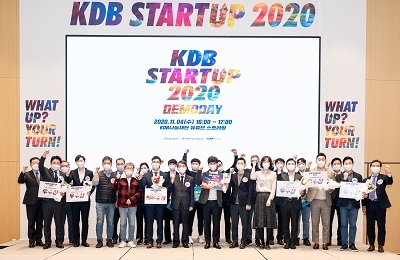
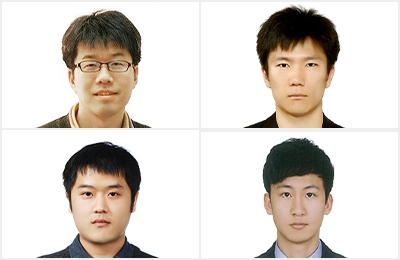
POSTECH won an excellence award at the 2020 Korea Development Bank (KDB) Entrepreneurship Education Program event hosted by the KDB Foundation and organized by the Korea Entrepreneurship Foundation. On November 4 at the SKY 31 Convention at the Lotte World Tower, the performance sharing meeting was held to verify the effectiveness of KDB’s entrepreneurship education programs. 33 university teams across the country presented on their business items developed through the programs. Team POSTECH (Academic advisor: Professor Ribin Seo) presented "RE:View", a customer review analysis and customer relationship management consulting service for self-employed small businesses using natural language processing technology. The item was among the three selected for the excellence award and received the KDB President’s Award. Team POSTECH, consisting of students Joong woo Park, Donghee Seo, Seung Mok Han, and Minseob Shim, will be provided 3 million won (USD 2,700) worth start-up funding, a chance to attend the start-up boot camp, and exemption from first round of screening for the KDB Entrepreneurship Program. 1,088 students from 16 universities in Korea participated in this year's program, which offers intensive training such as practical start-up education programs, and customer interviews and market research with the help from professional start-up educators. Under the COVID-19 quarantine guidelines, about 50 university students and pre-entrepreneurs attended the event in person, while 600 participants tuned in for the live online broadcast and actively engaged with the university teams in real time.
2020.11.11 1573 -
POSTECH’s Smart Metal-Printing Machine Selected as ISO International Standard
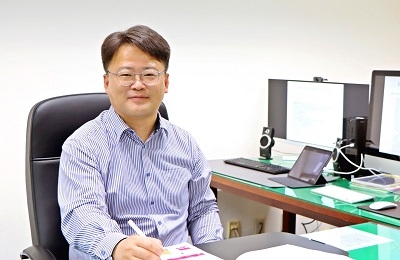
[A research team led by POSTECH Professor Suk-Hwan Suh has received the ISO approval on the innovative manufacturing equipment standards for Industry 4.0] Cyber-Physically Controlled Smart Machine Tool Systems for Adaptive Manufacturing (CPSAM) international standards (ISO 23704-3) developed by POSTECH Professor Suk-Hwan Suh (Director of POSTECH Research Center for Smart Factory) of the Department of Industrial & Management Engineering has been approved on October 15 by the ISO Physical Device Control (ISO/TC184/SC1) after three months of voting. Developed countries, including Japan, are currently leading the smart metal-printing machines industry. Korea is a latecomer and its standards have lacked adequate support from member countries to be adopted as an ISO international standard. Commonly referred to as 3D printers, stacking machines have been mainly used for making prototypes using plastic materials, but have recently been used as equipment to produce metal-based products across industries such as automobiles and aviation, along with the development of various materials, design, process and post-treatment technologies. Smart stacking machine is labeled as a ‘machine that makes machines’ that can monitor, analyze, and optimize additive processes using smart technologies such as Internet of Things (IoT), artificial intelligence (AI), and digital twins. Smart stacking machines have the advantage of not only improving quality, using less materials, improving the environment and safety, which are all key to stacking, but also improves the productivity of the entire manufacturing process through communication and cooperation with other manufacturing equipment within the factory including humans and robots. Therefore, it is expected that this will have both direct and indirect effects on the hardware industry and the various solution software industries supporting it, cloud and service industries, automobiles and aviation industries, etc. In particular, the metal printing machine that stacks metal materials is a convergence technology that requires not only materials technology but also design, processing, and post-treatment technologies. This machine reduces the production time compared to the conventional cutting methods and allows manufacturing of materials in any form. The international standards made by POSTECH was selected with the support from the POSTECH Research Center for Smart Factory and the Korean Agency for Technology and Standards. The ISO’s approval was obtained with countries including Germany, the U.K., Italy and China assisting the efforts, and Sweden and France expressing their desire for partnership. In addition, Professor Suh’s Reference Model for Cyber-Physically Controlled Smart Machine Tool Systems (CPSMT) (ISO 23704-2) was also adopted in 2018, and a standard is being enacted. With this year’s approval of the ISO international standards for CPSMT Cyber-Physically Controlled Smart Machine Tool Systems for Adaptive Manufacturing once again, Korea has achieved great success in leading the international standards in two major fields of smart machines. Professor Suh remarked, "This adoption of the ISO international standard has boosted the international profile of Korea, a latecomer to the smart machine tools industry." He added, "We anticipate this to be an opportunity to increase the market share as domestic suppliers preemptively apply the international standards to their products.” Professor Suh concluded, “It will also be meaningful topic for interdisciplinary education and research regarding machinery, new materials, computers, control systems, industrial and system engineering, which deal with the software, hardware, new materials and smart factory sectors for Industry 4.0.” Professor Suh is currently the convener of the ISO Technical Committee (ISO/TC184/SC1/WG11).
2020.11.04 2037 -
Professor Dong Gu Choi Wins the Prof. Tcha Young Research Fellow Award
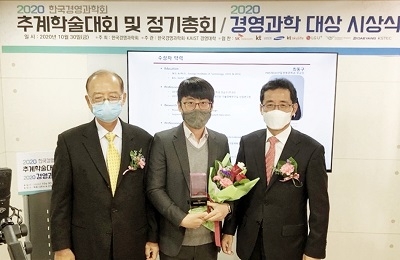
Professor Dong Gu Choi of the Department of Industrial and Management Engineering won the Prof. Tcha Young Research Fellow Award at the 2020 Best Management Science Application Award presented by The Korean Operations Research and Management Science Society (KORMS) on October 30. Professor Choi, who received his Ph.D. from the Georgia Institute of Technology, served as a senior researcher at the Korea Institute of Energy Research before joining the POSTECH faculty in 2016. Professor Choi has designed business models and market policies that are newly emerging in the energy and environment sectors by applying various management theories, and has been actively conducting research on the efficient operation of these businesses and policies. He was selected for this award in recognition of his research achievements and contribution to the growth of the management science field and KORMS. The Prof. Tcha Young Research Fellow Award, named after Dong-wan Tcha who is the dean of KAIST's Graduate School of Information & Media Management, is presented to rising researchers under the age of 40 who have achieved outstanding achievements through industry-academic cooperation in the field of management science at home and abroad. Since its establishment in 2014, only five researchers have received the award including POSTECH professor Bong-Gyu Jang in 2014.
2020.11.03 1924 -
POSTECH Students Win the ETRI President Award
POSTECH doctoral students Seungho Han and Chanho Kim, and Sungyu Jeong in the MS/PhD integrated program from the Department of Electrical Engineering (Advisor: Professor Byungsub Kim) have won the ETRI President Award at the 21st Korea Semiconductor Design Competition. This annual competition is hosted by the Korean Ministry of Trade, Industry and Energy and the Korea Semiconductor Industry Association. The research team successfully developed a software that automatically generates the layouts of the analog and hybrid semiconductor circuits, and created various layout designs for high-speed wire transmitters for diverse semiconductor manufacturing processes. Until now, layout designs of analog and hybrid semiconductor circuits required lots of time and money to develop because the designers had to draw them one by one. In addition, as the semiconductor manufacturing process has become finer and the design more intricate, the issue of productivity has long been a major hindrance to the growth of the semiconductor industry. Seungho Han’s research team was highly praised for opening up the possibility to drastically lowering the time and cost in developing the analog and hybrid semiconductor circuits. The Korea Semiconductor Design Competition has been held since 2000 to train people in the field of design and to discover creative new ideas. This year, 137 people from 53 teams participated in the competition which was the biggest turnout ever. POSTECH professor Byungsub Kim’s lab has consistently won various awards at the competition since 2014.
2020.10.30 1925 -
Professor Hee-Kap Ahn, the First Asian Editor-in-Chief of Computational Geometry
POSTECH professor Hee-Kap Ahn of the Department of Computer Engineering and Graduate School of Artificial Intelligence has been appointed as the Editor-in-Chief of Computational Geometry: Theory and Applications, an authoritative international journal on algorithms. Professor Ahn is the first Asian to be appointed to this position. The journal focuses on geometric algorithms within the field of computer algorithms and was launched in 1991 by Elsevier, one of the largest publishers of academic journals in the world. Professor Ahn served as the journal’s editor for six years since 2015 and now he will assume the position of Editor-in-Chief with Professor Jörg-Rüdiger Sack from Carleton University (Canada) beginning in November 2020 for three years. Together, they will perform duties including thesis classification and evaluation and selection of reviewers and final publications. The appointment is significant in that Professor Ahn is the first Asian to be selected for this role since the journal’s establishment. Professor Ahn has designed outstanding algorithms that surpass their conventional capabilities and his research findings have been presented at various international conferences and in academic journals over the years.
2020.10.28 1781 -
Professor Junsuk Rho Wins the Young Investigator Award from MNE
POSTECH Professor Junsuk Rho of the departments of mechanical engineering and chemical engineering won the Young Investigator Award and Lectureship from Micro Electronic Engineering (MEE), a world-renowned conference on micro- and nano-scale device and system fabrication. The award is presented by the European Microelectronic Engineering (MEE), one of the world's top three academic societies in the field of micro and nanotechnology, to researchers who have high influence and outstanding achievements within eight years of obtaining their Ph.D. degrees. The awards are named after the two journals published by Elsevier: Microelectronic Engineering (MEE) and Micro and Nano Engineering (MNE). Professor Junsuk Rho who won the award from MNE – the journal that focused on fusion research of micro and nanotechnology – is considered as world’s best researcher in nanofabrication using electron beam lithography. He received this award for his research contribution to the development of nano-optics, especially for his innovative research on metamaterials. This is the first time a researcher from a non-European region, institution or nationality has won the award since the establishment of the association. The awards ceremony and keynote speech were originally scheduled to be held at this year's conference but were postponed to the 47th MNE conference in Turin, Italy, in September 2021 due to the COVID-19 pandemic.
2020.10.27 1665