News & Updates
-
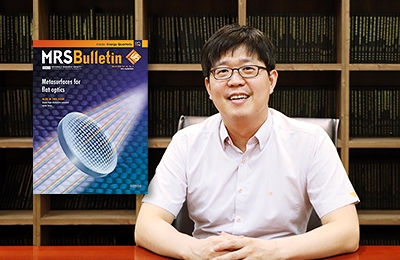
Professor Junsuk Rho Named Guest Editor of MRS Bulletin
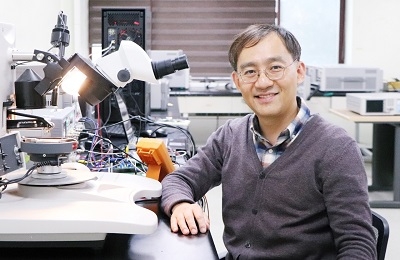
[Top Scholars in Metasurfaces Research Participate in the March Issue] Professor Junsuk Rho of the departments of mechanical and chemical engineering at POSTECH has been selected as the guest editor for the March issue of the bulletin published by Materials Research Society. The MRS is the world’s largest academic organization in materials research and has more than 15,000 members including professors, researchers, students, and others from more than 90 countries. It organizes various conferences and is one of the most-participated international organizations for Korean researchers. The MRS Bulletin, published monthly by the society, is well-known for selecting topics each month and inviting leading researchers in the field to introduce relevant research trends, in-depth industry outlook and key reviews. The March 2020 issue covers the theme of "Metasurfaces for Flat Optics," a research area in which Professor Rho excels. The bulletin begins with Professor Roh's introduction on metasurfaces and flat-panel optics, and is followed by “Transdimensional material platforms for tunable metasurface design” by Professor Alexandra Boltasseva of Purdue University, “Freeform metasurface design based on topology optimization” by Professor Jonathan Fan of Stanford University, “Metasurface optics for imagining applications” by Professor Byoungho Lee of Seoul National University, “Nonlinear optics with resonant metasurfaces” by Yuri Kivshar of Australian National University, and “Machine learning for nanophotonics” by Haim Suchowski of Tel Aviv University. All are outstanding scholars in the field of metasurface research and editing such bulletin proves Professor Rho’s position in the field. Professor Rho commented, “It is an honor to publish the March issue of the MRS Bulletin as a guest editor with world-class scholars.” He added, "By the time the bulletin publishes, we will also conduct an online lecture (MRS Webinar) on the 25th that discusses special topics from the bulletin.”
2020.03.17 1637 -
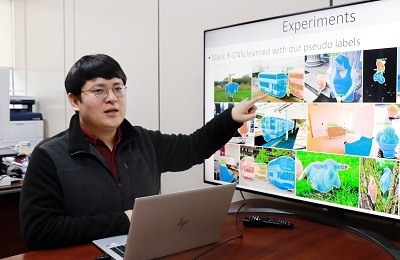
Professor Suha Kwak Appointed as Editor of International Journal of Computer Vision
Suha Kwak, a computer engineering professor at POSTECH, has been appointed as an editor of the International Journal of Computer Vision (IJCV) since February 2020. The IJCV has been published by Springer since 1987 and is currently the most respected journal in the field of computer vision along with the AI journal, IEEE Transactions on Pattern Analysis and Machine Intelligence. Recognized as best in the field of weakly supervised learning and AI visual recognition, Professor Suha Kwak received his bachelor's and Ph.D. degrees from POSTECH and worked as a post-doctoral researcher at the Paris École Normale Supérierue and the Inria Paris in France. Before joining the POSTECH faculty in February of 2018, he taught at the Daegu Gyeongbuk Institute of Science and Technology (DGIST). Professor Kwak’s primary research interests lie in computer vision of artificial intelligence related to visual cognition, especially in techniques for learning visual recognition models with little or no human supervision.
2020.03.10 1795 -
POSTECH Faculty and Students Recognized at Home and Abroad
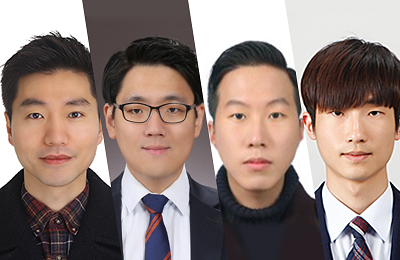
- Professor Seokhyeong Kang of Department of Electrical Engineering receives the "Most Influential Paper Award” at the ASP-DAC 2020 - Daeyeon Kim and Seunghwan Lee of Department of Electrical Engineering receive the Best Paper Award at the 27th Korean Conference on Semiconductors - Dr. Jeesu Kim of Creative IT Engineering, receives the Young Investigator Award from Optical Society of Korea Despite the sluggish mood brought on by COVID-19, POSTECH professors and students continue to be recognized in Korea and around the world. A paper published by Professor Seokhyeong Kang of Department of Electrical Engineering received the "10-Year Retrospective Most Influential Paper Award” at the Asia-Pacific Design Automation Conference (ASP-DAC) held in Beijing, China on February 13th-16th. The ASP-DAC is the most prestigious academic conference in the semiconductor design automation and embedded systems industries, and annually selects one most influential academic paper of the past decade. The paper published by Professor Kang in 2010 was titled, “Slack Redistribution for Graceful Degradation under Voltage Overscaling” and it presented a new paradigm of semiconductor design methodology using error-resilient techniques. The research was conducted in collaboration with Andrew B. Kahng (University of California, San Diego), Rakesh Kumar (University of Illinois Urbana-Champaign), and John Satori (University of Minnesota). In addition, students of the Department of Electrical Engineering won the Best Paper Award at the 27th Korean Conference on Semiconductors (KCS) held at High1 Grand Hotel on February 13th. KCS is Korea’s largest conference on semiconductors and a total of 12 papers were awarded the ‘Best Paper Award’ among the 803 papers published in 2019. POSTECH doctoral student Daeyeon Kim (Advisor: Professor Seokhyeong Kang) received the ‘Excellent Poster Award,’ a prize awarded to only two papers among these best 12 papers. He had presented on the efficient algorithms for the bus interconnection with heterogeneous integrated circuits titled, “Modified A* Algorithm for Obstacle-aware Topological Bus Routing.” This algorithm can synthesize a consistent routing topology and improve the noise immunity of the bus. Additionally, the paper published in 2019 by POSTECH masters student Seunghwan Lee (Advisor: Professor Rock-Hyun Baek) was a winner of the Samsung Best Paper Award. Under the title of “Observation of mobility and velocity behaviors in ultra-scaled Lg = 15 nm silicon nanowire p-MOSFETs with different channel diameters,” the paper analyzed the characteristics of gate-all-around silicon nanowire elements based on physical parameters. He was recognized for discovering the nonlinear performance characteristics that only occurs at very fine channel lengths and suggesting the direction of research on development of ultra-fine devices utilizing that concept. Meanwhile, Dr. Jeesu Kim of Department of Creative IT Engineering won the Young Investigator Award at the 2020 Optical Society of Korea Annual Winter Conference. This award is given to researchers under the age of 35 who are recognized for their outstanding research and potential in the optics field. Dr. Kim has conducted research on optics, ultrasound, and photoacoustics, and has been acknowledged for his achievements and potential in development of photoacoustic imaging equipment and its applications ranging from laboratory-based preclinical studies to actual clinical research.
2020.03.09 1575 -
Members of POSTECH Give to Those in Need
[Faculty and staff donate to the underprivileged in Pohang.] POSTECH presented the funds raised through the “Small Donations, Big Love Project – Give a Little of Your Salary” campaign to the Community Chest of Korea last month to help the underprivileged people in our community. The 'Small Donations, Big Love Project” began when university members, including professors, staff, and researchers, voluntarily started donating amounts less than 1,000 won or 10,000 won from their monthly salary. About 15.4 million won (USD 12,951) collected since 2018 through its 140 participants will be used to help those in need in Pohang. Through this campaign, POSTECH has donated 11.61 million won (USD 9,764) 2016 and 6.68 million won (USD 5,617) in 2017 to help North Korean defectors, to provide scholarships and living expenses for the youth, and to donate coal briquettes and rice. In 2017, POSTECH donated 33.75 million won (USD 28,383) collected by its members to Handong University, which was hard hit by the earthquake. President Kim commented, “I hope that the small donation from our members will help those neighbors in need.” He added, “If beautiful hearts come together to give, we can create a better world together.”
2020.03.06 1690 -
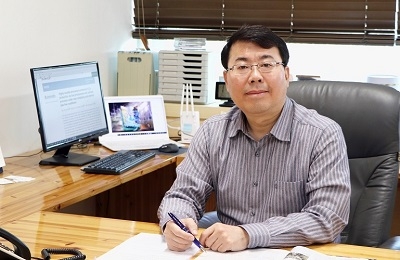
Professor Wonyong Choi Appointed Editor-in-Chief of the New Journal ACS ES&T Engineering
Professor Wonyong Choi of POSTECH’s School of Environmental Science & Engineering has been appointed as the founding editor-in-chief of the journal ACS ES&T Engineering. Professor Choi is the first Korean to become an editor-in-chief among the over 60 journals published by ACS. He earned his B.S. in chemical technology from Seoul National University, an M.S. in chemistry from POSTECH and a Ph.D. in environmental chemistry from the California Institute of Technology. His research areas are focused on semiconductor-based photoelectrochemical systems and environmental chemical processes to address various aspects of environmental and energy-related issues. Professor Choi has previously served as an editor for the Journal of Hazardous Materials from 2008 to 2017 and as an associate editor for Environmental Science & Technology (ES&T) since 2017. “ACS ES&T Engineering will have a global focus and an international reach, serving the broad scientific community working in this important field,” says Professor Choi. “I am excited to shape this journal into a vital source for research on environmental technology and engineering, and I look forward to working with the editors across the ES&T family of journals to advance the mission and impact of environmental science. “The environmental technology and engineering field is highly interdisciplinary and rapidly expanding and merging with other disciplines beyond the ‘traditional’ environmental engineering area. I want ACS ES&T Engineering to serve as an international forum for innovative material-, technology-, process-, data analytic- and systems-based solutions which manage, protect and remediate our dynamic environment and support decision-making within complex engineered systems. The journal will be a focal point for novel and innovative engineering advances addressing important environmental challenges,” Professor Choi continued. ACS ES&T Engineering will build on the strength of its parent journal, ES&T, the most-cited journal in its field. ACS ES&T Engineering will begin to accept submissions this spring. “We founded ACS ES&T Engineering in order to respond to the growing scientific attention and public interest in the challenges facing our planet,” says James Milne, Ph.D., president, ACS Publications Division. “I am confident Professor Wonyong Choi will establish this journal at the very forefront of the latest advances in environmental engineering research and technological innovation, and as a title the community will truly aspire to read and publish in.”
2020.03.02 1845 -
POSTECH Shares MOOC Courses with Universities Affected by COVID-19
- POSTECH shares 57 online courses through its own MOOC platform, POSTECHx. - They include an official course for Beijing Jiaotong University. Certificate from POSTECH president to be issued upon completion of course. As many universities delay the start of the new semester due to COVID-19, preparing educational programs for students who are facing an “involuntary” spring break has become a hot issue. For those universities struggling to come up with a solution, POTECH will share its MOOC (Massive Open Online Course) with universities and students at home and abroad for the first time. POSTECH is sharing basic to advanced courses on AI and big data, and key technologies of the Fourth Industrial Revolution including blockchain, IoT, and 5G networks. There are a total of 57 courses including those offered through existing platforms such as K-MOOC, STAR-MOOC, and Coursera. Among the courses offered, 'Linear Algebra’ – produced in English – is an official course for the students of Beijing Jiaotong University. Students can register for any course by simply signing up as a member on POSTECHx (https://postech.smartlearn.io/). Upon completion of all required work and quizzes on the POSTECH's platform, a certificate from POSTECH’s president will be issued. It is up to each university to officially credit the course. POSTECH is sharing its contents at no cost not only to curb the flow of Chinese international students into the country and to use MOOC instead, but also to help those universities facing difficulties arranging for MOOC courses quickly. However, due to the nature of POSTECH, most of its courses are in science and engineering, and in need of courses in humanities and social sciences. Interest and participation from other universities are encouraged. President Moo Hwan Kim stated, “The proliferation of COVID-19 is a national challenge, but it is a time to reaffirm the need for universities to develop new educational programs to cope with disasters.” He added, “Catalyzed by POSTECH’s sharing of its MOOC programs, I hope that we can overcome this difficulty together by sharing educational programs and contents across universities.” For those universities wishing to integrate POSTECH's MOOC courses into their curriculum, they can contact POSTECH’s Innovation Center for Education at 054-279-3594.
2020.03.02 1802 -
POSTECH Wins Most Humantech Paper Awards
-13 groups and 23 faculty and staff won the awards including three Gold Award winners, four Silver Award winners, 12 Bronze Award winners, four Participation Award winners. -POSTECH Department of Creative IT Engineering the Special Award in the categories of the Most Paper Per Faculty and the Most Winning Paper per Faculty for two consecutive years. POSTECH had a total of twenty-three winners at the 26th Humantech Paper Award organized by Samsung Electronics, including the Special Award given to the University. This year, there were three students in two groups who won the Gold Award, four students in three groups winning the Silver Award, 12 students in five groups winning the Bronze Award, four students in three groups who won the Participation Award. The Department of Creative IT Engineering won the Special Award in the categories of the Most Paper Per Faculty and the Most Winning Paper per Faculty for two consecutive years. Wonseok Cho and Jaeyong Park from the Department of Materials Science and Engineering won the Gold Award with their research paper titled, ‘Air bubbles embedded robust haze films for reducing screen-door effect in virtual reality display.’ Their research was recognized for its distinguished accomplishment as it presented a solution to solve a problem when nonradiative area appeared due to magnified lenses in the virtual reality display. Also, Daegun Kim of Chemical Engineering won the Gold Award with his paper titled, ‘Reversely Induced Energy-Filtering Effect for High-Performance Organic Thermoelectric Nanocomposite.’ Furthermore, the Silver Award winners are Jaehyeon Lee of Mechanical Engineering, Insang Yoo of Materials Science and Engineering, Kyoungmin Kim of Creative IT Engineering, and Yeonsu Park of Computer Science and Engineering. Bronze Award winners include Seonghee Cho from School of Interdisciplinary Bioscience and Bioengineering, Seung Wan Jeon of Creative IT Engineering, Wonseok Choi of Electrical Engineering, Hongki Kim of Chemical Engineering, Junwoo Lee, Kyoungwon Choi, Sang-ah Park, and Dasol Chung of Chemical Engineering, Jeongwoo Park of School of Interdisciplinary Bioscience and Bioengineering, Byul-lee Park of Creative IT Engineering, and Changhoon Choi of Creative IT Engineering. Namyup Kim and Sehyun Hwang from Computer Science and Engineering, Minsik Kong of Materials Science and Engineering, Jungsoo Kim and Hui-yong Chun of Creative IT Engineering won the Participation Award. Among these winners, Wonseok Choi received two Bronze Awards with his two research papers. The Humantech Award has been organized by Samsung Electronics since 1994 with a purpose of searching for distinguished scholars in the field of science and technology and developing global competitiveness and world’s top technology by fostering the found scholars. This year’s competition had a total of 1,857 research papers and only 118 papers were selected for the awards. There are ten different research subjects under the University category and papers are awarded with Gold, Silver, Bronze, and Participation Award accordingly. Grand Award is only granted to one out of the entire nominees. Gold Award winners receive ten million KRW and Silver winners receive 7 million KRW. Bronze and Participation Awards winners are rewarded with 5 million and 2 million KRW respectively. Every year, POSTECH has produced numbers of winners.
2020.02.14 1696 -
Prof. Jae-Yoon Sim Selected as ‘Scientist of the Month’
Prof. Jae-Yoon Sim of the Department of Electrical Engineering has been selected as the Scientist of the Month by the Ministry of Science and ICT, and National Research Foundation of Korea for the month of February. Prof. Sim demonstrated wireless Internet of Things (IoT) platform with a system on a chip that worked with the electric power of nanowatt (10-9 watts). He was highly praised for his research and for building a foundation for further research on healthcare, smart city and other IoT integrated areas. The world has been competing for developing technologies to bring high performance and high efficiency in computers like microcomputers for sensor networks and quantum computers that represent IoT. In the midst of this competition, the news on Prof. Sim’s winning the award has gained attention as he is the first one to develop the system on a chip (SoC) in Korea and is serving as the Director of Scalable Quantum Computer Technology Platform Center. Prof. Sim said, “Designing an integrated circuit is like a creating a new thing by putting Lego blocks called transistors together in a creative way and therefore it requires an artistic taste. I anticipate that related research works will be utilized as a generic technology for developing system semiconductor technology such as nano, bio sensor materials, implant clinical laboratory, device technology for batteries and antennas in Korea.” Scientist of the Month is the award granted to a researcher who has contributed to scientific technology development with his/her research. A winner will receive an award by the Minister of Science and ICT and reward of ten million KRW.
2020.02.13 1841 -
POSTECH Issues Korea's First Blockchain Degree Certificate
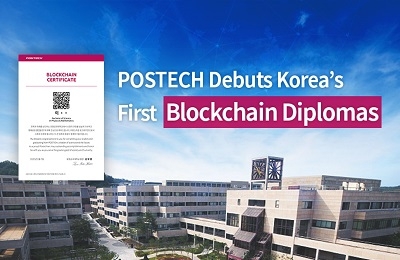
POSTECH is the first university to issue blockchain degree certificates in Korea. On the 7th of February, the graduation ceremony for the academic year 2019 was scheduled and the university issued digital degree certificates to all students via email and Kakaotalk, a mobile instant messaging application. It was the first time that an institution issued its degree certificate on a blockchain to graduates. Digital degree certificates cannot be counterfeited or tampered with. When a third party desires to verify the degree, the certificate holder needs to grant access. The blockchain-based certificate issuance service used by the university is called broof and it is developed by a venture company ICONLOOP founded by POSTECH alumnus Jong Hyup Kim. POSTECH introduced this service as a trial. By using their service, a university can issue certificates of degrees without building a database, so it can simplify the service process which then saves cost. Also, graduates can access their information anywhere at any time. They can control who has access to their information and this has the advantage of protecting personal information. The POSTECH Information Research Laboratories (PIRL) had already issued blockchain-based degree certificates to the graduates of POSTECH Blockchain Executive Program using the same service twice last year. The University is considering expanding the service to all academic administrative levels, from academic transcripts to degree verifications. Meanwhile, the graduation ceremony was postponed to July 10th due to the novel coronavirus outbreak to prevent its spread and protect the students and faculty. The first day of the 2020 spring semester has also been postponed to March 2nd from its originally scheduled date of February 17th. The 2020 Matriculation Ceremony and the orientation for the new incoming students are cancelled as well. For those students who cannot attend the graduation ceremony in July, they can visit their academic department to receive their degree certificates.
2020.02.13 1865 -
POSTECH & DGIST Sign a Memorandum of Understanding to Collaborate in Mapping the Human Brain
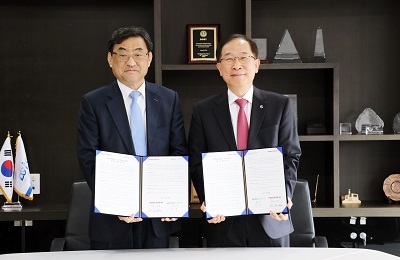
- POSTECH & DGIST signed an MOU for a research partnership, participating in the ‘International SYNAPSE Project’ as representatives of the Republic of Korea. - It is anticipated that they will play an essential role in conducting the international research on neuroscience and brain science. POSTECH and DGIST signed a memorandum of understanding to initiate ‘International SYNAPSE (Synchrotron for Neuroscience: an Asia-Pacific Strategic Enterprise) Project’ as representatives of Republic of Korea on the 28th of January. The agreement between the two institutions for close collaborative research brings expectations for constructive effects in this international effort for mapping the human brain’s neural network. ‘International SYNAPSE Project’ is a consortium of six Asia-Pacific countries (Republic of Korea, Taiwan, Japan, Singapore, Australia) to construct a human brain map. The purpose of this collaborative effort is to pave the way for research innovation that can understand and identify brain disease, cognition, behavior and sense and is planning to conduct the research for five years which could take up to 30 years if each participating country was to investigate on the research. Based on this MOU, DGIST will utilize super computers of Super Computing & Big Data Center and POSTECH will use synchrotron facility of Pohang Accelerator Laboratory for the research. First, they will collect images of human brain’s neural network through the synchrotron facility and save these images in super computers. Later, they will calculate interactions between synapses of the brain and establish a related network system. Through this research, POSTECH and DGIST will play a major role in setting a milestone for development of neuroscience and brain science. President Moo Hwan Kim of POSTECH said, “As research these days need to investigate on bigger projects to bring the world a step forward through collaborations among different countries, I anticipate that POSTECH and DGIST will play a key role in creating research breakthroughs with other six Asia-Pacific countries in neuroscience and brain science which have the most unknown field to be studied. Especially, the 3rd and 4th generation accelerators will help obtaining high-quality images of brain which will be critical in mapping the human brain’s neural network.” Also, President Young Kuk of DGIST said, “I hope six Asia-Pacific countries participating in the Project will lead in neuroscience and brain science research with expansion of research accomplishments created by facilitating the exceptional super computers of DGIST which is initiated by this MOU. I also anticipate that this research will create a virtuous cycle of rapid research establishments.” Pohang Accelerator Laboratory (PAL) is established in 1994 as the first synchrotron facility in South Korea. Since its establishment, it has been leading growth of the national research competency in the field of synchrotron, resulting in about 6,000 SCI papers. Currently, PAL is operating Pohang Light Source, the 3rd generation accelerator and PAL X-Ray Free-Electron Laser, the 4th generation accelerator.
2020.01.30 1753