News & Updates
-
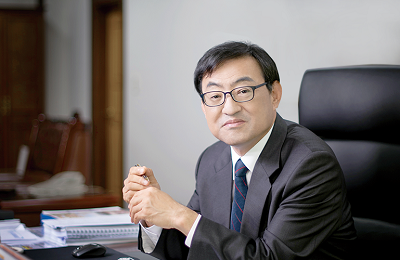
Professor Moo Hwan Kim of Division of Advanced Nuclear Engineering / Mechanical Engineering Appointed as the Eighth President of POSTECH
The POSTECH Foundation (Chairman Jeong-Woo Choi) appointed Professor Moo Hwan Kim of the Division of Advanced Nuclear Engineering (DANE) / Mechanical Engineering as the eighth president of POSTECH at the second board of trustees meeting of 2019 academic year held on July 17th. He succeeds President Doh-Yeon Kim, whose term expires on August 31st. The new president’s term in office is four years from September 1, 2019 to August 31, 2023. Regarding the appointment, the board stated, “The newly appointed president Moo Hwan Kim presented the vision of fully realizing POSTECH's founding tenets by playing up the strengths of a small elite university, in building a model where each unit grows through self-driven innovation. We affirm that he has the capacity to realize this vision.” Professor Moo Hwan Kim was born in Busan and attended Kyunggi High School, then went onto receive both his bachelor’s and master’s degrees in nuclear engineering at Seoul National University in 1980 and 1982. He continued his studies at the University of Wisconsin-Madison and received his Ph.D. in 1986 then joined the POSTECH faculty in the following year. He is an expert in the field of nuclear safety technology and has held leadership positions in various departments at POSTECH, including vice president of student affairs, admissions, external relations and communications, and planning, and as a professor of Division of Advanced Nuclear Engineering (DANE). He also served as the president of Korea Institute of Nuclear Safety (KINS) from 2013 for three consecutive years. The board further remarked, “We have agreed that the newly appointed president is well-equipped to be POSTECH’s president as he possesses excellent leadership and communication skills and demonstrates strong initiative. The board added, “With this new appointment, we encourage all members of the POSTECH community, including professors, staff, students, alumni, and the foundation to do their best in fulfilling the founding tenets of POSTECH and in growing into a global university.”
2019.07.23 1892 -
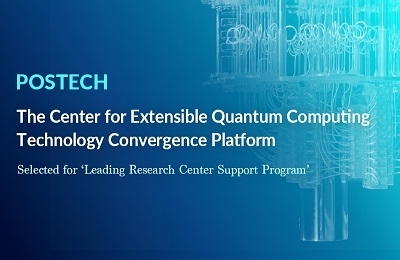
POSTECH to Establish Korea’s first Extensible Quantum Computing Technology
The Center for Extensible Quantum Computing Technology Convergence Platform (Director: Professor Jae-Yoon Sim, Department of Electronics and Electrical Engineering) at POSTECH was selected as a national project by the Ministry of Science and ICT for its ‘Leading Research Center Support Program’ in the area of engineering (ERC: Engineering Research Center). The center will receive 13.5 billion KRW (total of 14.7 billion KRW including 1.35 billion KRW granted to Gyeongsangbuk-do Province) in government funding over the next seven years. In addition, Professor Jae Choon Cha of Department of Mathematics will also receive funding on his research on four-dimensional topology and knot theory as it was selected for the Research Leader Program under the nation’s Basic Research Program. Through this designation, the Center for Extensible Quantum Computing Technology Convergence Platform will: Build the nation's first quantum computer; develop quantum computing technology; establish an industrial hub platform through cloud services; and nurture a core set of engineers specializing in quantum computing. The quantum computer surpasses the calculation performance of the conventional supercomputer by millions of times using the principles of quantum mechanics. It can be used in virtually every industry including defense, science, medical, pharmaceutical, automobile, and aerospace. Ministry of Science and ICT operates a variety of programs to support exceptional researchers. Among them, the ‘Leading Research Center Support Program’ is divided into five areas (science, engineering, medical, convergence, and regional innovation) and funds basic research in each area to cultivate core talent and strengthen industrial base in science and technology fields. The Research Leader Program, for which Professor Jae Choon Cha was selected, is the representative basic research program in Korea, and aims to cultivate creative basic research abilities and deepen and develop research through individual research support. The program selects researchers of the highest caliber every year and funds an annual average of 800 million ~ 1.5 billion KRW for 9 years. Eight researchers, including Professor Cha, are supported by this program at POSTECH currently.
2019.07.10 1774 -
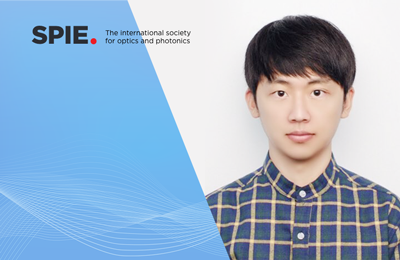
POSTECH doctoral student Gwanho Yoon awarded the SPIE scholarship in U.S.
- Anticipated to contribute to future of optical engineering - Selected in Forbes ‘30 Under 30 Asia 2019’ Gwanho Yoon, a doctoral student in mechanical engineering at POSTECH (Pohang University of Science and Technology, President Doh-Yeon Kim), has been awarded the 2019 Optics and Photonics Education Scholarship by SPIE (Society of Photo-Optical Instrumentation Engineers), the largest academic society in the field of optical engineering. Yoon, working in the Nanophotonics Lab led by Professor Junsuk Rho, has been specializing in various researches on metasurface, widely known as the “invisibility cloak” technology. This research has attracted much attention because it also leads to future technologies through augmented and virtual reality technology, 3D hologram display and ultra-thin flat lens. Yoon stated, “Even though metasurface outperforms conventional optical technology, only laboratory-scale production was possible due to its high production cost and difficulty in large-scale production. But this research develops quick and inexpensive metasurface production technology, allowing us to make an important contribution to commercialization of metasurface.” Yoon made headlines in April when he was selected as one of the '30 Under 30 Asia 2019' leaders in the Healthcare and Science category by Forbes, an American business magazine. This SPIE scholarship, awarded to students who are expected to contribute significantly to the future of optical engineering, was awarded to a total of 84 students from all over the world in 2019 and Yoon was the sole recipient in Korea and amongst the four in Asia. Yoon’s advisor Professor Roh added, "Since this scholarship is known to be rarely awarded to non-US countries and especially not to Asian universities, I believe that SPIE has weighed Yoon’s potential at a higher level.”
2019.07.05 1721 -
The Cell Membrane Protein Institute to be Established in Pohang, Finding a Cause of Disease by Light Source
[Establishment of the Institute raises a hope for promoting Korea as a leading player in the new pharmaceutical market which has reached over 1,500 trillion KRW.] Cell membrane proteins are known to cause over 60% of all disease, but it has been difficult to analyze them and apply to the development of new drugs. For this reason, the Cell Membrane Protein Research Institute (CMPRI) is to be established in Pohang, the third of its kind in the world, and anticipated to analyze cell membrane proteins in depth. The Ministry of Science and ICT recently appointed the consortium of POSTECH and Gyeongbuk Province as the final grantee of the “Synchrotron Radiation Accelerator-based Drug Development Project” grant and promised to support 22.9 billion KRW for establishing the Institute which is the core goal of the project. The Cell Membrane Protein Institute will invest the total amount of 45.8 billion KRW over the period of five years from 2019 to 2023 and will be located in the Pohang Fusion Tech District which is to be developed by Daegu Gyeonbuk Free Economic Zone Authority. Using the 4th generation light source operating at POSTECH, the Institute will research on structural functions of cell membrane proteins. The Institute is the first national research institute for such comprehensive and systemic research which is to be established as the third of its kind in the world, followed by the first two in Germany and U.S.A. When cell membrane proteins are analyzed, it will not only be much easier to find new drug candidates but it will also develop more creative screening technology than the conventional compound screening for drug discovery. Furthermore, it will save the cost and time invested in discovering new drug candidates significantly. It is anticipated that all these future achievements are to elevate Korea to lead in the global new pharmaceutical market which has reached over 1,500 trillion KRW. The Institute plans to develop new drug candidates and antibody-drug conjugates by analyzing structures, functions and applications of membrane proteins of six severe disease such as cancer, contagious disease, metabolic syndrome, brain disease, cardiovascular disease, and rare disease - pancreatic cancer, breast cancer, hypertension, sepsis, and AIDS to name a few. Led by Professor Jie-Oh Lee of Life Sciences at POSTECH, the CMPRI Project Bureau was launched at the University in last February for establishment of the Institute and research on cell membrane proteins. The Bureau will be responsible for (1) core projects including establishment of the Institute, (2) identifying high resolution three-dimensional structures of cell membrane proteins and research on activation of membrane proteins, and (3) discovering structure-based design of antibodies and lead compound. Moreover, the Bureau will manage the POSTECH Fund to foster start-ups and venture capital companies and to create jobs, bringing more achievements than just pharmaceutical research. It will further expand its business in promoting venture capitals, associated with POSCO Venture Valley Project. Since the fourth-generation synchrotron radiation facility built at the University in 2016, the Synchrotron Radiation Accelerator-based Drug Development Project has been collaboratively conducted by POSTECH, Gyeonbuk Province, and Pohang City for cultivating industries poised for growth in the future.
2019.07.04 1957 -
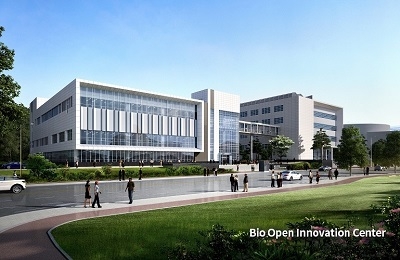
The construction of Bio Open Innovation Center begins
POSTECH declared its vision and initiatives as a value creating university in 2016. Following its vision, POSTECH will establish Bio Open Innovation Center (BOIC) to directly contribute to the regional development of Pohang City and its construction will begin in February of 2020. BOIC is expected to support academia-industry research on development of new drugs. Jointly invested by POSTECH, Pohang City, and Genexine, BOIC is to be a research base for new pharmaceuticals, creating an industrial ecosystem of new pharmaceuticals in the region by attracting corporations and research centers and incubating biotech startups. One of the investors of this center, Genexine, is widely known as a successful model of a biotech venture company that has grown into a nation’s leading pharmaceutical company. The center will be equipped with a pilot plant for new drug development that can pilot produce and support commercialization of drug candidates. Both domestic and international biotech companies and research institutes will be resided as well as a project bureau for the Cell Membrane Protein Research Institute (CMPRI). POSTECH has put vast efforts in establishing BOIC to contribute to the regional development with a hope that it will not only promote high value-added pharmaceutical industry but also attract corporates and thus create new job opportunities. Moreover, Gyeongbuk Province and Pohang City will also take the lead in the investment for this initiative. They expect that it will attract companies from home and abroad, encourage startups to launch and foster biotech experts which all eventually lead to job creation in the region. Relating to one of the residents in the center, the project bureau for establishing CMPRI which is a key project for the development of new drugs using synchrotron radiation accelerator. About 35% of proteins in the human body are cell membrane proteins and they cause over 60% of all major disease. However, it was difficult to analyze its biostructure for the development of new drugs due to its incredibly small size. The 4th generation light source operating at POSTECH has 1,000 times and more intensity of light than the conventional 3rd generation light source. This will help understand the mechanism of this type of protein at the levels of molecules and atoms. Therefore, CMPRI, jointly established by POSTECH, Gyeongbuk Province, Pohang City, and POSCO, will use the 4th generation light source, to identify the structure of the cell membrane proteins and select drug candidates. In this regard, the institute is expected to provide a breakthrough for the new drug industry of Korea and help rise in the global market that has reached 1,500 trillion KRW. To accomplish this goal, the University invited the leading expert in the field of cell membrane proteins, Professor Jie-Oh Lee from KAIST and appointed him as the head of CMPRI project. He received his doctoral degree from Harvard University and is an influential scholar in the nation, listed in the top 100 rising influential Koreans. President Doh-Yeon Kim of the University said, “Pohang has achieved incredible economic development based on the steel industry represented by POSCO, but now it is time to take the second leap. As a value creating university, POSTECH hopes to lead the advancement of Gyeonbuk Province and Pohang City with BOIC.”
2019.06.10 1969 -
First Sod Cut for Bio Open Innovation Center (BOIC)
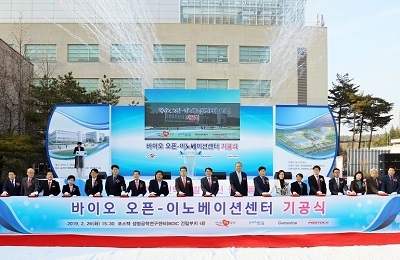
- Genexine, ASU, and over 20 pharmaceutical institutes to move into the BOIC - Initiative launched to build the first Cell Membrane Protein Research Institute in Korea POSTECH cut the first sod on the site of the new Bio Open Innovation Center (BOIC) on February 26, 2019. The BOIC, an innovation platform for academia-industry collaboration on new drug research, is one of POSTECH’s signature initiatives to drive the regional development as in line with its vision of becoming a Value Creating University. The groundbreaking ceremony for BOIC was held in attendance of more than 200. The guests included POSTECH president Doh-Yeon Kim, economic vice governor of Gyeongbuk province, mayor of Pohang, local member of the National Assembly (Mr. Myoung-Jae Park), president of Genexine, POSCO officials, and representatives of biopharmaceutical and biotechnology companies. POSTECH, Pohang city, and Genexine have made a joint investment in the BOIC with the aim of developing it into a new drug industry base. They anticipate that the BOIC will boost the tri-sector collaboration on new drug research, bringing the academia, industry, and research institutes closer. It will also lay the foundation for a regional industry ecosystem through incubating biotech startups and attracting firms and research institutes. Genexine, one of the co-investors, is widely known as a successful model of a biotech venture company. The once nascent startup, founded by POSTECH professor Young-Chul Sung, has now grown into a Korea’s leading pharmaceutical company. Along with domestic and overseas bio companies and research institutes set to move in, the BOIC is to be equipped with a new drug development pilot plant that supports the testing and production of new drug candidates. A project bureau for the Cell Membrane Protein Research Institute (CMPRI) will also settle in the BOIC. The establishment of the BOIC has been of great importance in POSTECH’s efforts to contribute to the regional development. It will serve as the focal point for developing the high value-added pharmaceutical industry and attracting enterprises with new job opportunities. Gyeongbuk province and Pohang city are, likewise, taking the lead in the investment for this initiative and adding momentum to bringing in business from home and abroad, encouraging entrepreneurship, and training bio experts. They are hoping that these movements will ultimately lead to a boost in job creation in the region. As part of the BOIC groundbreaking ceremony, the CMPRI project bureau kicked off on the same day with an inauguration ceremony. This project is one of the core schemes for new drug research pivoted on the PAL-XFEL. At the inauguration, POSTECH, Gyeongbuk province, Pohang city, and POSCO signed a Memorandum of Understanding and agreed to support the establishment and management of the Cell Membrane Protein Research Institute. The ceremony was followed by the unveiling of the signboard of the Institute and announcing the appointment of Professor Jie-Oh Lee of Life Sciences as the head of the project. Professor Lee, listed in the top 100 rising influential Koreans, is a domestic authority in the field of cell membrane protein. The Cell Membrane Protein Institute will use the PAL-XFEL, the 4th generation light source, to identify the structure of the cell membrane protein and derive candidate substances of new drug. Despite the fact that cell membrane proteins account for over 60% of the causes of diseases, the examination and analysis of their biostructure still largely remain an unsolved problem due to the complexity. The Institute, for that reason, is expected to provide a breakthrough for Korea’s new drug industry and help rise in the global market that has reached 1,500 trillion KRW. Doh-Yeon Kim said, "Pohang has achieved incredible development based on the steel industry represented by POSCO, but now it is time to take a second leap. As a Value Creating University, POSTECH hopes to lead the betterment of Gyeongbuk province and Pohang city hand in hand with BOIC."
2019.04.15 1844 -
The First Asian American President of the University of Mis-souri System, Dr. Mun Y. Choi, Is Awarded an Honorary Doctorate at POSTECH
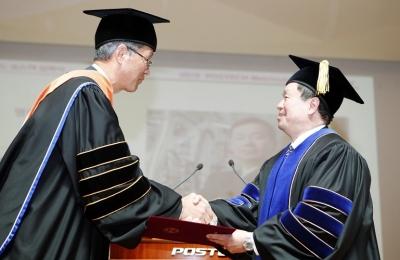
[He delivered inspiring messages to Postechians, saying “If I can do it, you can do it, too.”] Dr. Mun Y. Choi, who is the first Asian American to become president of the University of Missouri System in 177 years of its history, is awarded an honorary doctorate at POSTECH. POSTECH decided to award an honorary doctorate of mechanical engineering to President Mun Y. Choi and, the degree was awarded to him at the 2019 POSTECH Matriculation Ceremony held in the auditorium of the university on February 15. President Choi, the world’s renowned scholar in thermal engineer-ing, immigrated to Ohio, U.S.A with his family at the age of nine and, he received his master’s and doctorate degrees in mechanical and aerospace engineering from Princeton University. After serving as a faculty at University of Illinois at Chicago and Drexel University, he was appointed as a dean of engineering at the University of Connecticut (UConn) in 2008. In 2012, he took on a role as a provost and executive vice president of the university. During his term in the office, he led development of research capa-bilities and increased industrial partnerships, making the UConn a top 25 national university. Acknowledging his leadership, the University of Missouri System with its 177 years of history appointed him as the first Asian Ameri-can president to oversee its four campuses and 77,000 faculty and staff in March 2017. At the ceremony, President Doh-Yeon Kim of POSTECH comment-ed in his welcoming speech, “President Mun Y. Choi immigrated to the United States at the age of nine. As a 1.5 generation immigrant, he might have faced countless difficulties, however, he has made distinctive research achievements and contributed to development of science and technology and higher education through his innovative leadership. I am confident that he will inspire many newcomers, students, faculty and staff of POSTECH as a person who has well illustrated our motto; creativity, integrity, and aspiration.” In response, President Mun Y. Choi said, “I am very honored to be-come a part of POSTECH that has declared to be a value-creating university for a better future of the nation and the humanity.” He al-so encouraged students saying, “Although I have become the first Asian American president of the University of Missouri System, my youth was very normal and there was no ordinary thing in those past days. If I can do it, you can do it, too.” With reference to honorary doctorate, POSTECH has been awarded honorary doctorates to distinguished people in the nation and around the globe, who remarkably attributed to development of aca-demia, the nation, and humanity. After Dr. Roderick MacKinnon of Rockefeller University, who won the Nobel Prize in Chemistry, first received the degree in 2006, it was awarded to six more individuals including Dr. Jeong-Hoon Kim, former president of Bell Labs in 2010, Dr. Peter S. Kim, former president of Merck Research La-boratories in 2011, Seok-hyun Hong, chairmain of JoongAng Hold-ings in 2016, Ryoji Noyori, Nobel laureate and endowed chair fac-ulty of Nagoya University and Jin-kyu Huh, chairman of Iljin Group in 2018.
2019.02.25 1816 -
Polaris3D showcases self-driving indoor robot solution at CES 2019
On January 8th, nearly 190,000 attendants and 4,500 companies from around the globe gathered at the Las Vegas Convention Center for the annual CES. For over fifty years, world-changing technological innovations such as the VCR, camcorder, CD player, HDTV, and 3D printer, to name a few, have been introduced to the marketplace at CES. Sharing the floor alongside industry giants such as Dolby, Intel, and Samsung at CES 2019 was Polaris3D—a startup established in 2016 by a group of POSTECH students. Led by CEO Inveom Kwak (Department of Creative IT and Engineering), Polaris3D provides solutions for precise and affordable self-driving indoor robots through autonomous localization. Polaris3D showcased ANS—Autonomous Navigating Solution—whereby precision self-driving is made possible by simply mounting a device onto the indoor robot. Without the need for additional and expensive infrastructures like UWB (Ultra Wideband) wireless connections, and unlike existing SLAM (Simultaneous Localization and Mapping) based technology and its massive computing requirements, Polaris3D’s proprietary mapping algorithms can operate in real-time with minimal power consumption and no additional equipment. As such, the application of ANS is flexible enough to be customizable into various fields such as logistics applications, drones, forklifts, and other service robots. The company is currently offering demos for industry and research applications, and expects to release ANS during the first half of 2019.
2019.01.23 1587 -
JoongAng Ilbo Ranks POSTECH 1st in Innovation and Engineering
JoongAng Ilbo recently released their annual rankings of universities in Korea, and POSTECH was ranked first in innovation and engineering, and second in natural sciences. ‘Inoversity’—an amalgam of innovation and university—was introduced for the 2018 rankings to evaluate innovation capacities through research achievements. POSTECH ranked first in collaborative research with industry and overseas patent applications to major countries. Also notable was that JoongAng Ilbo ranked POSTECH first for ‘Professor Research’ in Innoversity, engineering, and natural sciences. They lauded POSTECH’s performance in publications, inventions, and patents, and emphasized that the output of Professor Jong-Lam Lee (Department of Materials Science) was top of the class. In an interview, Professor Lee explained that he was a benefactor of POSTECH’s focus and support. JoongAng Ilbo also praised the research output of Professor Dong-Woo Cho (Department of Mechanical Engineering), a renowned expert in tissue engineering and bio-printing. JoongAng Ilbo releases their comprehensive and field-based university rankings every year. POSTECH, along with other STEM universities, are evaluated only in the field-based rankings.
2019.01.16 2116 -
The Inaugural Symposium of the POSTECH Communication and Public Discourse Institute: “Postechians, Who Are You?”
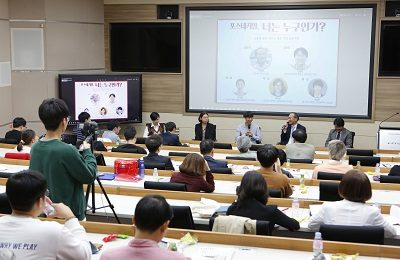
The inaugural symposium of the POSTECH Communication and Public Discourse Institute (CPI), entitled “Postechians, Who Are You?” was recently held on campus. The CPI was established to promote beneficial discourse among Postechians, experts in social sciences and humanities, and members of the regional community. The Institute aims to propel POSTECH to became a key platform for public discourse in the STEM field. This event was the first in the upcoming series of symposiums to be hosted by Chair Professor Ho-Keun Song’s three new research institutes (CPI, Research Institute for Convergence Civilization, POSTECH Peace Institute), and was planned to pay heed to external criticisms of POSTECH to prepare for a better tomorrow. The symposium featured speeches by Seok-Hee Lee (President of SK Hynix, Inc.) and Chang-Deok Kim (reporter for the Dong-A Ilbo). President Lee, a former professor of KAIST, spoke about his experiences in academia and the corporate field and the weaknesses inherent in the STEM pedagogical system. POSTECH alumnus Chang-Deok Kim spoke about his experiences in becoming a reporter and the measures a STEM student must take to partake in the public discourse sphere. A panel discussion and a Q&A session about the issues raised in the speeches followed with student representatives from KAIST and POSTECH delving into meaningful conversations with members of POSTECH.
2018.12.21 1605