News & Updates
-
The 1st Research University in Korea, POSTECH, Celebrates its 30th Anniversary
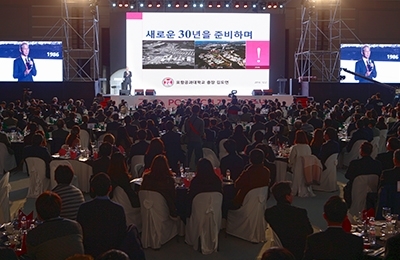
Pohang University of Science and Technology (POSTECH) first opened its doors in December 1986 as the first research-oriented university in Korea with a founding vision to advance the development of the nation and pursue the betterment of humanity through scientific and technological breakthroughs. Today, POSTECH has become the best research university in Korea, and one of the best in Asia, with international recognition built upon the 30 years of excellence. POSTECH’s meteoric rise has astonished the global community as it was ranked 28th among universities in the world in 2012 and 1st in the world’s top 100 universities under 50 years old by Times Higher Education from 2012 to 2014. This young private university that was established in a rural area of a non-English speaking country has defied the odds and blazed new trails in higher education and research by placing a strong focus on student-centered learning, excellent research, and well-oiled academia-industry collaboration. In celebration of its achievements over the past three decades, and in appreciation for those who contributed to the University’s development, POSTECH organized a variety of programs leading up to the anniversary week. The wide-range of programs included the celebration ceremony, conferment of an honorary doctoral degree to Nobel Chemistry Laureate Noyori Ryoji, nomination of thirty promising young scientists and fifteen local hidden-champions, homecoming events for alumni, and musical concert with Maestro Nanse Gum. At the 30th anniversary celebration ceremony, held in the Gymnasium on Friday, December 2nd, President Doh-Yeon Kim shared, on behalf of the University members, his gratitude and POSTECH’s vision for the next thirty years. Research universities now have a new mission to create value in society and lead innovation through research, rather than settling for a traditional role of creating knowledge and developing human capital. According to President Kim, POSTECH will stand at the forefront of this transformation into an entrepreneurial university in the 21st century. Please click the link below to get a glimpse of the anniversary events. https://www.facebook.com/pg/POSTECH1986/photos/?tab=album&album_id=10154716533345070
2016.12.20 2886 -
Prof. Yoon Hee Jeong wins ATPC Significant Contribution Award
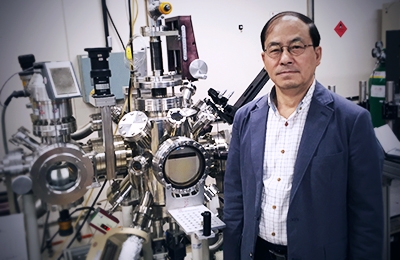
Prof. Yoon Hee Jeong (Dept. of Physics) was presented with the ATPC 2016 Significant Contribution Award at the 11th Asian Thermophysical Properties Conference (ATPC) held in Yokohama, Japan. The Significant Contribution Award was established in 2010 to recognize scientists who have achieved great accomplishments in thermophysical properties research. Prof. Jeong earned his doctoral degree in physics at the University of Chicago and was a post-doctoral researcher at Massachusetts Institute of Technology. He has been a faculty member at POSTECH since 1988. His research focus includes, but is not limited to, laser molecular beam epitaxy, ferromagnetic and ferroelectric thin films, and calorimetry and x-ray scattering. ATPC, along with the European Conferences on Thermophysical Properties (ETCP) and the Symposium on Thermophysical Properties (STP) in the US, is one of the three world-wide conferences on thermophysical properties. Each of the conferences is successively held every three years. The Significant Contribution Award is the highest honor that can be bestowed by the ATPC.
2016.11.07 2419 -
Prof. Moon Jeong Park named Associate Editor of Macromolecules
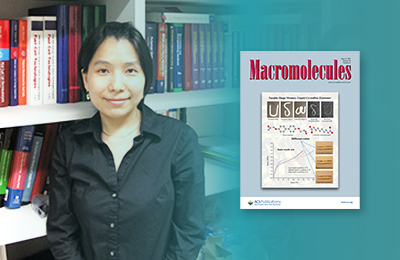
Prof. Moon Jeong Park (Dept. of Chemistry) has been appointed as the Associate Editor of Macromolecules, an authoritative international peer-reviewed scientific journal published by the American Chemical Society. It is reported that she is the first Korea-based scientist to join the editorial board of an international journal in the field of molecular science. Prof. Park, who was named last July the winner of Hanwha-Total IUPAC Young Scientist Award 2016 for the first time ever in Asia, is deemed as one of the most promising scientists in polymer chemistry. She earned her doctoral degree in Chemical Engineering at Seoul National University and was a post-doctoral scholar at the University of California Berkeley. She joined POSTECH in 2009 and is now an associate professor. Prof. Park is currently working on four major research topics: 1) understanding ion transport in polymer electrolytes to improve device performance; 2) designing organic-inorganic hybrid materials with an aim to improve their charge storage properties; 3) investigating the electromechanical behavior of ion-containing polymers to pave the way for advanced biomimetic technologies; and 4) exploiting fluorescence in non-conjugated amorphous polymer electrolytes to expand the category of highly-efficient light-emitting materials. The principle objective of her research is to develop a fundamental understanding of the chemistry of molecular interactions.
2016.10.21 2090 -
Prof. Namyoon Lee wins IEEE Outstanding Young Researcher Award
Prof. Namyoon Lee (Dept. of Electrical Engineering) has been selected as one of the 2016 IEEE Asia-Pacific Young Researcher Award recipients. Sponsored by the IEEE ComSoc Asia-Pacific Board (APB), this award honors young researchers who have been very active in IEEE ComSoc publications and conference activities over the last three years. The award is in recognition of his contributions to the field of wireless communication systems and statistical signal processing. Prof. Lee, who owns twenty related patents in the U.S. alone, was with the Nokia Research Center at Berkeley and Wireless Communications Research (WRC) at Intel Labs before joining POSTECH this year. Prof. Lee’s research focuses on developing and analyzing future wireless communication systems using tools including multi-antenna network information theory, stochastic geometry, and machine learning algorithms. He received his Ph. D. in Electrical and Computer Engineering at the University of Texas at Austin in 2014.
2016.10.14 2419 -
Young Game Makers Get Serious about Stretching Their Creativity for More than Fun
Aspiring game developers got together for Global Applied Game Jam 2016 held at POSTECH, South Korea, on Aug 24-26. More than fifty college students from South Korea, Netherlands, Japan, and China flocked to Pohang, South Korea, to participate in a 48-hour game development challenge hosted by Pohang University of Science and Technology (POSTECH). The event, entitled Global Applied Game Jam 2016, ran for three days from Wednesday August 24th to Friday August 26th in the C5 building on the POSTECH campus. Within a span of 48 hours, participants were challenged to plan, create, and develop playable applied games that “can help change the world through digital healthcare solutions,” in line with the theme of this year’s contest. Applied games, also known as serious games, are primarily designed for purposes other than pure entertainment. They are often used by industries such as education, health care, and defense to tackle real-world problems and raise social awareness. The game jam celebrated its fourth year since first given life in 2013 by the Department of Creative IT Engineering (CITE) at POSTECH, one of the top research universities in Asia, to provide a platform for innovative and interdisciplinary engineering education. CITE has been partnering with HKU University of the Arts Utrecht (HKU) in the Netherlands from the beginning for their rich knowledge and experience in game development. Along with the founding member colleges, POSTECH and HKU, several Korean universities, such as Seoul National University, Korea National University of Arts, and Hongik University, took part. Students from Nihon University of Japan and Jilin Animation Institute of China also joined the challenge for the first time this year. The young game developers from over ten universities had diverse disciplinary backgrounds in game development-related fields such as game studies, programming, graphic and sound design, and storytelling. They formed a team of five participants to compete through their ideas and game-making skills for 48 straight hours under the coaching of professors and expert developers. The winner of this year’s Grand Award was Neck_Slice, a team led by CITE student Seungjin Chai. They developed a game called Stretcher that was designed to prevent back and neck disc, a common problem among gamers and heavy computer users caused by bad posture, by encouraging a stretching habit. Including Neck_Slice, there are five winning teams – one Grand prize, two Excellent prizes, and one each of the Creative and Convergence prizes. In addition to awards and prizes, the winning teams are offered free consulting services for business development. Those winners who are CITE students will also be sponsored to participate in a game contest to be held in the Netherlands this coming December.
2016.09.06 2139 -
POSTECH Rowing, the University’s first official athletic team
The University now has the first official collegiate athletic team of its own – a coed rowing team. POSTECH Rowing was initiated as part of the efforts to foster well-rounded global leaders equipped not only with intelligence and moral virtues, but also with physical strength. Rowing is one of the most popular intercollegiate sports, due to traditional rivalry between elite universities such as Oxford vs. Cambridge and Harvard vs. Yale. Widely regarded as a “gentleman’s sport,” rowing has been embraced by the Ivy League schools. There were seven collegiate rowing teams in Korea including those with Seoul National University, Yonsei University, and Korea University. POSTECH is the eighth to join the league. The POSTECH Rowing members, comprised of eighteen male and three female students, are breaking a sweat as training is now in full swing. Under Coach Manju Kim, a professor with the Dept. of Chemistry, and Assistant Coach Eunyoung Park, a former national rower, the students are working to improve their physical fitness and master basic techniques in preparation for upcoming tournaments. “Through rowing, our students will learn to push themselves beyond their limits and to play fair and square not only in sports but in every battle they face in life,” President Doh-Yeon Kim shared his hope. The University will continue to support POSTECH students to grow and develop into global leaders with mental and physical toughness, teamwork skills, and leadership qualities.
2016.08.17 2029 -
Challenging the 'rigidity' for smart soft electronics
Soft electronic devices, such as a smartphone on your wrist and a folding screen in your pocket, are looking to much improve your lifestyle in the not-too-distant future. That is, if we could find ways to make electronic devices out of soft organic materials instead of the existing rigid inorganic materials. Conducting polymers are a promising candidate that could be utilized for these next-generation applications because they are malleable, lightweight, and can conduct electricity, although their charge carrier mobility is intrinsically lower than that of inorganic materials. Various studies therefore have focused on how to boost the speed at which the charge carriers move in conducting polymers. Many researchers have attempted to enhance the charge carrier mobility by increasing polymers' crystallinity, which is the degree of structural order. However, this approach is inherently restrictive in terms of mechanical properties. In other words, an increase in the crystallinity results in a decrease of the mechanical resilience, at least according to the conventional norm. A team of researchers with the Dept. of Chemical Engineering at Pohang University of Science and Technology (POSTECH), consisting of Profs. Taiho Park and Chan Eon Park with their students Sung Yun Son and Yebyeol Kim, has found a way to solve this dilemma and developed a low crystalline conducting polymer that shows high-field effect mobility. Their findings were recently published as the cover article in the Journal of American Chemical Societyand highlighted in the Spotlights. To improve charge transport in a low-crystalline conducting polymer, the researchers took a simple yet unconventional approach. They introduced monomers without side chains into the polymer and utilized unconventional localized aggregates as stepping-stones to expedite charge transport in the microstructure of the polymer. Park et al. found that the resulting increase in the backbone planarity and chain connectivity of the polymer gave rise to enhanced charge transport along and between the polymer chains. Their findings provide not only a greater understanding of charge transport dynamics in low-crystalline conducting polymers but also a new strategy in molecular design that allows faster charge transport without the loss of mechanical advantages. Taiho Park and Chan Eon Park, the two corresponding authors of this research, anticipate that their study opens up numerous possibilities and will bring forth new research, solutions, and applications for soft electronics. This work was supported by grants from the Center for Advanced Soft Electronics under the Global Frontier Research Program (Code No. NRF-2012M3A6A5055225) and the National Research Foundation of Korea (NRF) grant (Code No. 2015R1A2A1A10054230) funded by the Korea government (MSIP).
2016.08.06 1968 -
POSTECH & PAL, 3rd in the world to produce XFEL
The fourth generation light source at Pohang Accelerator Laboratory, the PAL-XFEL, has successfully produced an ‘x-ray free-electron laser’ (XFEL), which is considered by many to be the “dream light.” Following the United States and Japan, Korea has become the third country now that owns one of the most advanced tools to explore the unknown territories of science and technology. The laser’s successful production at the PAL-XFEL only took two months (April 2016 – June 2016) after the first trial run on April 14, whereas it took the US two years and Japan four months. The laser was first observed on June 14th and confirmed on the 29th by the external verification committee on field inspection. The XFEL has an extremely short wavelength, a speed faster than lightening, and the brightness 10 billion times greater than the 3rd generation light source (10 quadrillion times of the sunlight). It allows scientists to observe matter at nanoscale levels and capture moments as short as one ten-trillionth of a second in which molecules are bonding and breaking. The XFEL is extremely useful in the examination and analysis of protein structures and molecular chemical reactions that require utmost sensitivity. It is believed that the laser will open the road to revolutionary breakthroughs in scientific research, particularly in green energy technologies as well as development of new materials and medicines.
2016.07.27 2938 -
Prof. Moon Jeong Park wins the Hanwha-Total IUPAC Young Scientist Award 2016
Prof. Moon Jeong Park (Chemistry) has become the first scientist based in Asia to win the Hanwha-Total IUPAC Young Scientist Award 2016 by the International Union of Pure & Applied Chemistry (IUPAC). The award, which is dedicated to outstanding young scientists not older than 40 years, is granted biennially on the occasion of IUPAC World Polymer Congress since first awarded in 2004. This year, the award was presented to two awardees: Prof. Moon Jeong Park, of our own, and Prof. Brent Sumerlin with the University of Florida, USA. Prof. Park, widely known as one of the most promising scientists in polymer chemistry, received her doctoral degree in Chemical Engineering at the Seoul National University. She was a post-doctoral scholar at the University of California Berkeley before she joined POSTECH in 2009, where she is now Associate Professor. Prof. Park was named the winner of Hanwha-Total IUPAC Young Scientist Award 2016, for the first time ever in Asia, in recognition of her significant contribution to the following areas: ionic-liquid containing polymers; design of self-assembled polymer electrolytes; organic-inorganic nanohybrides for enhanced ion/charge transport; chemical sensors based on ionic polymers; and high ionic conductivities and cation transfer numbers combined with high mechanical strength and a broad range of application. A neutral and objective scientific organization established in1919, IUPAC is the world authority on chemical nomenclature, terminology including the naming of new elements in the periodic table, and standardized methods for measurements, atomic weights and many other critically-evaluated data. IUPAC has over 50 national member countries, 31 associated organizations, and about 58 company associates.
2016.07.25 1979 -
Postechians’ Summer Experience in Society kicks off
POSTECH has introduced a change in the academic calendar to extend the length of summer vacation to three months, encouraging the students to fully immerse themselves in the society through a new internship program called “Summer Experience in Society (SES).” POSTECH has been a pioneer in many areas, and another item has been added to the list: a three-month-long summer vacation. It is quite unusual in Korea’s higher education system as most other universities have less than 10 weeks for summer recess. POSTECH has made the bold move in order to provide its students with sufficient time and institutional support to pursue their interests in greater depth. The extended break not only makes it easier for students to participate in overseas programs, travel, or start their own business, but also facilitates career path exploration and hands-on experience building by interning at global corporations or research institutes through SES. SES, an internship match-up program provided by the University, connects POSTECH students with summer internship opportunities at more than 170 institutions including global corporations, domestic and overseas research institutes, and venture companies. From Samsung, LG, SK Hynix, SAP, and Oracle to Max Planck Laboratory, Fields Institute, KIST, Genexine, and Lendit, the list of participant goes on. The wide variety of institutions, out of which students can choose to intern with, offers students numerous options regardless of whether they dream to be a researcher, to work for a global business firm, or to become a CEO of their own company. The University hopes that the extended summer break will also reinforce other programs and student activities, which take place during the summer, such as the Undergraduate Research Program. Student reactions have been positive. Jiwon Chae, an Industrial and Management Engineering major whose schedule is full this summer with an internship and two business items for start-up, is delighted at the new term system. “Thanks to the longer vacation, I will be able to pursue all of them. It would have been difficult with the previous academic calendar.” “Our students will be living in a society that is far different from the one we are living in. Today’s existing jobs will be replaced by what is yet unknown. A revolutionary and innovative education will be the key to fostering leaders for the era of changes,” President Doh-Yeon Kim explains. “Measures like the three-month-long vacation and SES drive our students to challenge themselves with new tasks and accumulate experience. We hope to give our students the full support they need to acquire a comprehensive skill set befitting future leaders.”
2016.06.20 2174