News & Updates
-
Revolutionizing Organ Development: POSTECH Researchers Develop Novel 3D Bioprinting Process
Professor Dong-Woo Cho’s team at POSTECH is engaged in the development of novel tissue and organ printing technology that can bridge that gap that currently exists between the supply and demand of tissues and organs for patients suffering from tissue loss or organ failure. This novel tissue printing technology could lead to the regeneration of healthy functional tissues or organs for patients, thus, eliminating the need for tissue grafts and mechanical devices. The POSETCH team made up of Falguni Pati, Jinah Jang, and Dong-Heon Ha, recently published their findings in an article entitled Printing three-dimensional tissue analogues with decellularized extracellular matrix bioink in the bimonthly scientific journal Nature Communications. The concept of tissue printing is essentially based on an additive manufacturing (AM) method that is generally conducted via a layer-by-layer process. This technique has the exciting prospect to print and pattern all the components that make up a tissue (cells and matrix materials) in three dimensions to generate structures similar to tissues. However, the majority of the studies so far have utilized matrix materials that cannot represent the complexity of natural extracellular matrix (ECM) and thus are unable to reconstitute the intrinsic cellular morphologies and functions. Accordingly, it fails to reproduce the structure and function intended. The researchers developed a method for the bioprinting of cell-laden constructs with novel decellularized extracellular matrix (dECM) for the formulation of bioink. This bioink is capable of providing an optimized microenvironment conducive to the growth of three-dimensional structured tissue. These new findings show the versatility and flexibility of the developed bioprinting process using tissue-specific dECM bioinks, including adipose, cartilage and heart tissues, capable of providing crucial cues for cells engraftment, survival, and long-term function. Using the POSTECH team’s tissue printing method, high cell viability and functionality of the printed dECM structures were achieved. Furthermore, the team’s bioprinting method with dECM bioinks could lead to the development of cancer models by recreating the microenvironmental characteristics representative of tumors in vitro.
2014.06.18 2741 -
Professor Sung H. Han Will Lead First Asian Conference of Ergonomics and Design
Professor Sung H. Han (Department of Industrial and Management Engineering) is an authority in the field of ergonomics, an applied science that deals with the design of devices and systems in conjunction with the physical working conditions, capacities, and requirements of the user. Professor Han has conducted research on human-computer interaction, effective product design, and the evaluation of product and service experience to provide better value to users. He has played a vital role in the establishment of Asia’s first National Institute of Ergonomics and is the founder of ACED (Asian Conference of Ergonomics and Design). The first ACED will be held at the Jeju Ramada Hotel from May 21-24, 2014. The main theme of the conference will be “New Challenge in Asian Ergonomics and Design”. More than 400 researchers from 14 countries in the Asia-Pacific regions including China, Japan, and Indonesia will attend the conference. The international participation in ACED is expected to play a significant role in helping change Western-oriented ergonomics research and product development to suit Asian culture and human characteristics. “On behalf of Asia, Korea took the lead in founding of ACED and hosting its first conference,” said Professor Han. “We expect to make a significant contribution to the relevant areas of research and industry innovation. In particular, we work in conjunction with the ICT industry which is the main axis of the creative economy. Ergonomics will play an important role in creating the future of the ergonomics industry that increases convenience in human life.”
2014.05.20 2730 -
Professor Kyungwhoon Cheun to Give Keynote Speech at IEEE VTC Conference
Professor Kyungwhoon Cheun (Department of Electronic Engineering) will give the keynote speech at IEEE (Institute of Electrical and Electronics Engineers) Vehicular Technology Conference at the Conrad Hotel in Seoul on May 20th. The topic of Professor Cheun’s keynote speech is “5G Vision & Key Enabling Technologies”. Professor Cheun will discuss the next generation of wireless communication that will be used in 2020, 5G wireless technology, the core technology of network design to telecommunications services, and the research and development output that can meet the essential elements of the 5G system. The conference was first held in 1950 by IEEE Vehicular Technology Society and concentrates on the areas of land transportation, railroad/mass transit, mobile communications, vehicular electro technology equipment and systems, and land, airborne, and maritime mobile services.
2014.05.19 2698 -
POSTECH Named Korea’s #1 on THE Asia University Rankings 2016
POSTECH has been ranked as #8 university in Asia, leading the pack of Korean universities in the recently published Asia University Rankings 2016 by the Times Higher Education (THE). The London-based provider of data and analytics on higher education used the same 13 performance indicators as the World University Rankings published last September. The indicators largely fall under a category in the five following areas: teaching; research; citations; industry income; and international outlook. The same indicators, however, have been recalibrated to reflect the recent changes in Asia’s higher education, such as the increasing importance on academia-industry collaboration. While POSTECH received high scores across all areas, its citations and industry income in particular stood out as proof of the University’s outstanding research excellence and impact. Since the university’s opening, POSTECH has continuously placed a strong focus on high-impact research and translation of research outcome into industrial applications, and consequently has shown impressive performance over the years. The University’s industry income above all has been at the world’s top for the past six years. Having launched a new initiative earlier this year to recruit industry professionals as full professors in consultation with corporations, POSTECH is building momentum for a leap forward. The University aims to transform itself from a top research university to a top entrepreneurial university that plays a greater role in society by fueling the economy and driving growth. According to the Asia University Rankings, the two best universities in Asia, National University of Singapore and Nanyang Technological University, are in Singapore followed closely by Chinese universities. In contrast to the rise of Chinese universities both in mainland and Hong Kong, Japanese universities have lost their places at the top except Tokyo University securing the 7th place in the list. Korea has three universities in the top ten, POSTECH at the 8th and Seoul National University and KAIST at the 9th and 10th, respectively.
2014.05.02 4198 -
Scientists at GIFT Develop a New Theory for Plasticity of Face-Centered Cubic Metals
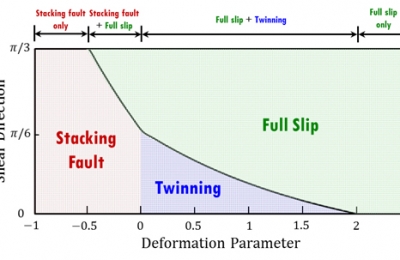
The fundamental concepts of physics are crucial to understanding the correlation of the structure and strength of materials. Some materials, like a steel coil spring or rubber, are elastic. Grasping a rubber ball deforms the shape momentarily before it returns to its original state. Other materials when manipulated with, such as clay, will retain its newly deformed shape. This phenomenon, called plasticity, has been studied by scientists in designing high strength steels and alloys. The demand for high-technology metallic materials continues to depend on further research and understanding of plasticity in order to strengthen and optimize the performance of metals. Now material scientists at POSTECH’s Graduate Institute of Ferrous Technology (GIFT) have developed a new theory for plasticity for structural materials. The research, carried out by doctoral student Minho Jo and Professors Yang Mo Koo and Se Kyun Kwon, in collaboration with Professor Byeong-Joo Lee at Department of Materials Science and Engineering of POSTECH and Professors Börje Johansson, the former chairman of the Nobel Committee for Physics, and Levente Vitos of the Royal Institute of Technology (KTH) in Sweden, is being published in the journal Proceedings of the National Academy of Sciences of the United States of America (PNAS). To date, no reliable microscopic theory of plasticity has been presented. For this paper, the researchers demonstrate a unified solution to plasticity by using molecular dynamics simulations to address the grain orientation effect on the deformation modes of face-centered cubic metals. They derived a single parameter in the theory and proved that the parameter sufficiently identifies the activation of various plastic deformation modes. This finding leads to the simple deformation mode diagram as shown in the figure, which fully specifies the potential diversity of metals. This deformation theory will have real-world application in the further study of what types of materials can be made stronger. As an example, the proposed theory will assist in the development of high-performance and energy-efficient automobile sheet by designing lighter but stronger metals and eliminating materials that weaken a structure. Professor Kwon plans to do more research on plasticity with his team at GIFT. “Future studies will include extending to other structures such as body-centered cubic and hexagonal closed-packed,” said Professor Kwon. He is also interested in analyzing the plasticity of nanoscale materials.
2014.04.29 2972 -
POSTECH Marks 20th Anniversary of Dr. Hogil Kim's Passing with Commemoration Events
This April 26th marks the 20th anniversary of the passing of founding POSTECH president Dr. Hogil Kim. An accomplished nuclear physicist, Dr. Kim was a visionary leader who was responsible for laying the foundation for POSTECH to become a leading research university. During his eight years as president, Dr. Kim led POSTECH to become a world-leading university by recruiting top high school graduates and hiring world-class faculty members. He was also a leader in the construction of the Pohang Light Source, the only light source in Korea. His innovative thinking spurred other Korean universities to turn its focus increasingly towards research-oriented education. Dr. Kim earned a bachelor’s degree in physics from Seoul National University in 1956 and his doctorate from the University of Birmingham, England in 1964. Among his many accomplishments, Dr. Kim was the past president of the Korean Scientists and Engineers Association of America and the former vice president of the Korean Physical Society. The broad human network he had fostered helped invite world renowned Korean senior professors to POSTECH, a major contribution to the successful launching of the university. To commemorate Dr. Kim’s death and honor his many contributions to POSTECH and to the science and engineering fields, POSTECH will host events during April 26th and 30th. The POSTECH community is invited to honor Dr. Kim with a visit to his gravesite in Jirye, Andong-city on the morning of Saturday, April 26th. Events honoring Dr. Kim will be held throughout the day on Wednesday, April 30th. A commemoration ceremony will be held at 10am on the first floor of the Hogil Kim Memorial Hall in front of Dr. Kim’s bust sculpture. The Pohang Accelerator Laboratory will give a tour and photo exhibition in commemoration of Dr. Kim starting at 11am. The Campaign for Hogil Kim Fund will host a luncheon at the Grand Ballroom of the POSCO International Center for invited guests. A commemorative forum chaired by former POSTECH president, Dr. Sunggi Baik, will be held at the conference room of the POSCO International Center from 2 until 4pm. The day will end with a commemorative speech titled “POSTECH’s Continuous Adventure” by POSTECH alumnus, Mr. Sukwoo Lee (’87), at the International Conference Room (1st floor) of the POSCO International Center at 5pm. Events are open to POSTECH faculty, staff, and students as well as invited guests.
2014.04.24 2978 -
Prof. Donghoon Hyeon Receives Best Paper Award from KMS
Professor Doghoon Hyeon (Department of Mathematics) will receive the best paper award given by the Korean Mathematical Society (KMS) with Professor Sung Yeon Kim (Kangwon National University). KMS announced that they will have a Spring 2014 meeting for reading research papers fromApril 24 to 26 at Gangneung-Wonju National University where Professor Hyeon will receive his award for best paper. Professor Hyeon published his paper in Annals of Mathematics, a journal published by Princeton University, in 2013. His paper titled, “Log minimal model program for the moduli space curves: The first flip”, seeks to understand the canonical model of the moduli space of curves. His successful achievement to use the geometric invariants theory to create a moduli space was recognized. Professor Hyeon received his Ph.D. from University of Illinois at Urbana-Champaign and was a professor at Northern Illinois University and Marshall University. He joined POSTECH as a faculty member in 2009.
2014.04.22 2826 -
POSTECH Signs MoU with KIER
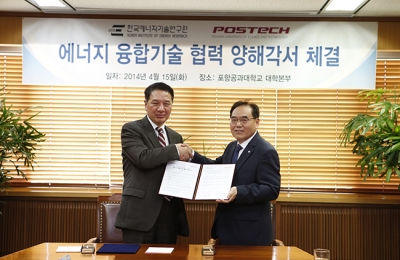
Pohang University of Science and Technology (POSTECH) and Korea Institute of Energy Research (KIER) signed a memorandum of understanding (MoU) on April 15 to work together on fusion energy sciences. The signing ceremony took place at POSTECH with POSTECH President Yongmin Kim and KIER President Kiwoo Lee. The objective of the MoU is to further collaborate on hydrogen fuel cells research, create a framework between the two institutions’ fusion energy sciences, and build cooperation for joint research on renewable energy (solar power, ocean energy, and wind power) technology.
2014.04.21 2919 -
Generated Cells a Scientific Breakthrough for RNA Therapeutic Research
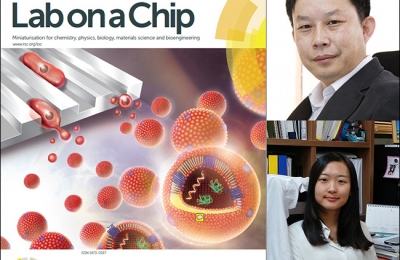
The research team of Professors Jaesung Park (Department of Mechanical Engineering) and Yong Song Gho (Department of Life Sciences) has developed a way to generate artificial nanovesicles that can be used to deliver RNA, a breakthrough that is expected to be used in exosomes research and to have applications in drug and RNA-delivery systems. Their paper, "Microfluidic fabrication of cell-derived nanovesicles as endogenous RNA carriers”, made it onto the cover of the journal Lab on a Chip and was selected as a Hot Article. Exosomes/microvesicles are known to shuttle biological signals between cells. Nonmeter sized exosomes were once considered to be useless. However, the team discovered that nanovesicles contained essential materials for mRNA and proteins. These nanovesicles are now being examined for various therapeutic applications. Because living cells in nature secrete only a small number of exosomes, the research team has proposed a method to force cells through hydrophilic microchannels to generate artificial nanovesicles. It was discovered that the artificial nanovesicle not only have membrane proteins that are similar to exosomes, but can also transfer cell materials to other cells.
2014.04.18 2555 -
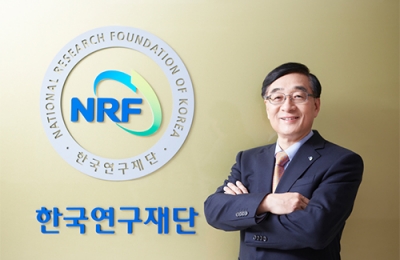
Retiring POSTECH Professor / NRF President Donates 100 million KRW to POSTECH
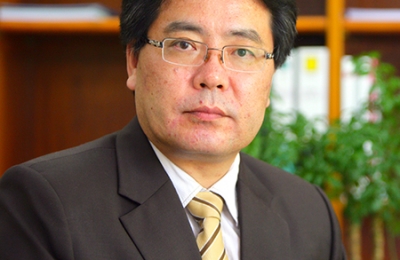
National Research Foundation of Korea (NRF) President Min Keun Chung and his former students have made a donation of 100 million KRW to POSTECH upon his retirement. Professor Chung joined POSTECH as a faculty member of the Department of Industrial and Management Engineering in 1987 and has been a leader in the successful development of the department. He is a world-leading expert in the field of ergonomics and has published approximately 100 papers. He was appointed as the 4th President of NRF in January 2014 after 27 years as a professor at POSTECH. Professor Chung’s donation will be used to fund POSTECH’s development, foster young students, and advance educational opportunities. His former students have also contributed to the donation. POSTECH will establish the Min Keun Chung Laboratory Fund to be used for the development of industrial and management engineering study. Professor Chung will present his generous donation to the POSTECH Development Fund at a ceremony held in his honor on May 18th. POSTECH will also award Professor Chung with the title of Professor Emeritus at the ceremony.
2014.04.18 2789