News & Updates
-
Residential College Provides Leadership Activities for Students
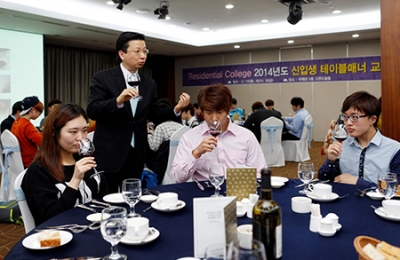
The Residential College (RC) at POSTECH has provided leadership activities for freshmen and sophomores since 2008. While students live in the RC dormitory, they have the choice to participate in monthly activities for a small fee. The first program of the spring semester, “Table Manners”, was held on the evenings of March 24, 26, and 28. Sommelier Yoon Il Yong from the Hilton Hotel gave a lecture on good table manners. Students were taught table manners such as proper etiquette for using utensils. After the lecture, students were provided with a full course meal that would be served at a hotel restaurant to apply what they had learned. The event has been hosted by the POSTECH Residential College since 2008. Freshman and sophomore students have supervised by student residential advisors (RAs) and professors whom they can turn to for advice and guidance. The residential college model originated at University of Oxford and University of Cambridge and has since been implemented at other universities including Harvard University, MIT, and Yale University. These universities run academic programs in a community setting, typically within a dormitory. Some Korean universities have the residential program. POSTECH is the only university that has a 2-year course for it. Other RC activities planned for this semester include a field trip on May 5 to Daegu to watch the musical “Mamma Mia” or “Be Happy”. On May 10, students will visit Gamcheon Culture Village and Bupyeong Kkangtong Market in Busan to have a look at that region’s culture. On May 31, students will go rafting in Sanchong. “POSTECH students can develop professional competency and build an upright character through the residential program,” the director of undergraduate student affairs said.
2014.04.16 2798 -
Many of POSTECH Alumni Appointed to Top Spots at Leading Universities
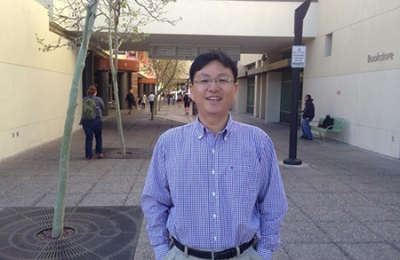
Many of POSTECH alumni go on to great heights in the field of higher education. Their appointment as professors and deans to some of the world’s top universities is evidence that POSTECH produces graduates who are well-respected for their research and leadership abilities. Professor Youngjun Son (BS ‘96) took office as the dean of the Department of Systems and Industrial Engineering at the University of Arizona. His career has received special attention because he was hired as a professor at the University of Arizona at the age of 26 and was promoted to full professor in only 10 years. He received the Outstanding Mentor of Graduate/Professional Students award from the Graduate and Professional Student Council at the University of Arizona in 2013. Professor Sungchul Choi (PhD ‘12) and Professor Namhyoung Kim (PhD ‘13), graduates of the integrated MS-PhD program, were appointed as professors to the Department of Industrial Engineering and to the Department of Applied Statistics at Gachon University respectively. Professor Choi did his post-doctoral work at the Samsung Advanced Institute of Technology. Professor Kim became the first professor at Gachon University to be appointed without post-doctoral experience. After serving as a chief researcher at Samsung Display, Professor Soondo Hong (MS ‘96) was invited to be a professor at the Department of Industrial Engineering at Pusan National University. Professor Byungsoo Na (BS ‘00) was appointed as a professor to the Division of Business Administration at Korea University (Sejong Campus) through the Georgia Institute of Technology and Samsung Electronics. Head Professor Kwangjae Kim of the Department of Industrial and Management Engineering was happy to hear that his department’s alumni are fostering young students all over the world. “This good news proves that POSTECH’s outstanding educational outcome is greatly acknowledged at home and abroad,” he said. “I will continue to develop a variety of programs and research initiatives to nurture future leaders in the field of industrial and management engineering."
2014.04.14 3012 -
Local Firms Collaborate with POSTECH Undergraduate Research Program
The POSTECH Undergraduate Research Program (URP) aims to boost the research capacity, creativity, and competitive spirit of undergraduate students. The program is seen as a perfect example of mutual cooperation between POSTECH and industry with strong support from local firms. Since 2000, POSTECH has promoted research activities via URP, financially assisting 5 million KRW in research funds to 40 to 60 projects and scholarships. Selected students work in research environments where they gain specific techniques and hands-on experience in their respective fields. The students’ research outputs have been published in both national and international journals and often qualify for patent application filing. To support URP, local firms have invested 150 million KRW for 30 projects to begin a student sponsorship campaign with a goal to eventually raise 250 million KRW. The Pohang Chamber of Commerce and Industry, Pohang Iron and Steel Industrial Complex (PHSIC), and other firms such as Chosun Refractoies participate in this campaign. Fresh and creative ideas from students may be adopted by various firms that in turn provide mentorship to students to develop their creative and entrepreneurial spirit. “I feel it is worthwhile to assist outstanding individuals who will lead Korea in the future,” said the CEO of PHSIC, who also highlighted the importance of developing a mutual relationship between POSTECH and firms in Pohang.
2014.04.10 2921 -
The National Center for Nanomaterials Technology Changes Its Name
The National Center for Nanomaterials Technology Changes Its Name The National Center for Nanomaterials Technology (NCNT), located at Pohang University of Science and Technology (POSTECH), has changed its name to the National Institute for Nanomaterials Technology (NINT). NINT, which was founded in 2004, is equipped with nanotechnology research equipment as a core infrastructure in the field of nanomaterials. NINT was originally named for the construction enterprise that was supported by the Ministry of Commerce, Industry and Energy. It was decided to change the name to NINT at the conclusion of the first stage of the commercialization project. “This is an opportunity to turn over a new leaf as a leading institute for nanotechnology,” said Professor Chan Gyung Park, the director of NINT.
2013.09.30 4335 -
Postechians “Challenge” The 2013 Sunrise Festival
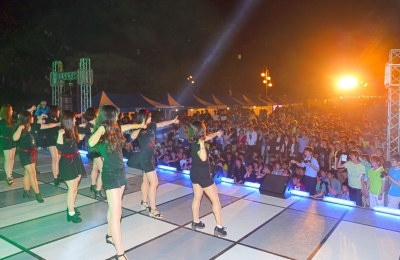
Postechians “Challenge” The 2013 Sunrise Festival The 2013 Sunrise Festival was held for three days from May 22 to 24 in front of the Jigok Community Center. This year’s motto was “Challenge”, which encouraged Postechians to take an active part in the festival and relieve stress that had built up during the semester. Postechians showed off their passion in various ways. At 6:30 P.M. on the eve of the festival, performances from the freshmen class from two departments (CiTE, MATH) started off the festival. Then President Yongmin Kim delivered a congratulatory message for the 2013 Sunrise Festival. At the stage in front of the 78 stairs, performances of the freshmen classes from two departments (IME, CHEM), Cheero and the Cheero Band, and performances of the freshmen classes from another two departments (CE, MSE) were held, respectively. Many Postechians came to watch the fruit of the efforts of performers who had prepared passionately for a couple of weeks. The department bars added to the amusement of the festival this year, as they have in previous years. On May 23, the committee finalized the plans for an unconventional festival, with a n impressive 27 booths and many other events. The evening booths were mostly food booths and bars, which were laid out in a line in front of the stage installed at the foot of the 78 stairs. During the day, various snacking booths and game booths were open for students to enjoy. This year’s committee planned many events. Especially taking pictures using polariod and Water Drain were popular with Postechians. In case of Water Drain, despite getting wet, many students participated in the event. The 78 Quiz was held at 3P.M. In the night, the special stages which were prepared weeks in advance provided both visual and auditory fun to the huge crowd that came out to enjoy the festival. Performances of student clubs including VOCES, BREMEN, STEELER, CTRL-D, P-FUNK, and the finals of the League of Legends Contest were held. On the final day, a school-wide singing contest, POSKING, and guest K-pop group, SunnyHill, blazed up every last bit of passion of Postechians. Night-booths were open late night for Postechians to enjoy the last bit of the festival.
2013.08.19 4133 -
POSTECH to recruit members of 'Consortium for Developing Fuel Cell'
* Link : http://us.aving.net/news/view.php?articleId=355039&Branch_ID=us&rssid=naver&mn_name=news POSTECH (Pohang University of Science and Technology, CEO Yong-Min, Kim, www.postech.ac.kr) will participate in 'RENEWABLE ENERGY KOREA 2012' which will be held from October 9th to 12th at COEX, KOREA to recruit members of 'Consortium for Developing Fuel Cell'. For more information, people can contact to Sung -Tae, Park (054-279-5466, parkst@postech.ac.kr), a senior researcher in Renewable Energy Lab of Pohang University of Science and Technology. Above this, they will also introduce PEMFC Test-bed Center, SOFC Test-bed Center and MCFC Test-bed Center. PEMFC Test-bed Center is a evaluation and test PEMFC system for the building and home-use. With SOFC Test-bed Center , user can build test station of BOP for MCFC, SOFC and can build test system for thermo-fluid characteristics of MBOP. Evaluation of NRC material is also available. In addition, MCFC Test-bed Center can build test system for medium-large size of MCFC(>5kW) as well as can evaluate durability during vibration for both fuel cells and BOPs. Meanwhile, 'REK 2012' is organized by Korea Energy Management Corporation. For this year, 'Korea Green Energy Show' and 'Green Energy Job Fair' are hosted together to provide an opportunity for gathering all kinds of energy related industries at one spot as well as creating new job opportunities. Go to 'REK 2012' Special Page Global News Network 'AVING' by Clare Jang (www.aving.net)
2012.10.08 3717 -
More Korean research papers published in foreign journals
* Link : http://www.koreatimes.co.kr/www/news/nation/2012/09/117_120993.html The number of articles written by Korean college professors and published in foreign academic journals rose by more than 7 percent between 2010 and 2011, data showed Thursday. According to the data by the education ministry, an average of 0.3 articles per one professor of the country's 180 colleges were published in the foreign journals last year, up by 7.1 percent from a year earlier. The number of papers published in the local journals also rose by 1.8 percent to 0.57 articles per professor, the data showed. By school, Pohang University of Science and Technology (POSTECH) ranked first in the number of research papers carried by local and foreign academic journals with 1.39 papers per teacher, followed by Seoul's Kwangwoon University with 1.35 and Korea University with 1.3 papers, the data showed. "The increase is partly attributed to the government's Brain Korea 21 project to develop human resources through which researchers can enjoy more support, including financial support," an education ministry official said. The amount of research funds per professor increased by 1.8 percent to 68.37 million won ($61,088) last year, the data showed. POSTECH topped the list of research expenses with 796.7 million won on average per professor, followed by Seoul National University with 234.3 million won and Ulsan National University of Science and Technology with 189.7 million won, according to the data.
2012.09.28 3409 -

President Yongmin Kim honored as UW Medicine Inventor of the Year
* Link : http://engage.washington.edu/site/PageNavigator/Bioengineering/Summer2012/Summer2012_KimAward.html Past BIOE Chair Yongmin Kim honored as UW Medicine Inventor of the Year Yongmin Kim’s commitment to saving lives and focus on solving clinician’s real-world problems have driven his innovations for 30 years. Now, the man who worked with his research group to pioneer more than 85 inventions leading to 60 patents, put inventions into industry practice with 25 licenses, and helped commercialize the technologies, will be hailed as the 2012 Inventor of the Year by the UW School of Medicine. The award recognizes scientists who have worked with the biomedical industry to translate their research from the lab into practice, with a major impact on health care. Kim accepted the honor earlier this month at UW Medicine’s 9th annual Inventor of the Year ceremony. When Kim joined the UW Bioengineering faculty in 1982, department founder Robert Rushmer asked him to collaborate with engineers, cardiologists and industry to build a burn-free defibrillator paddle. Within two years, they had solved the problem, and Kim was hooked. That focus on benefitting the public inspired Kim to continue to work closely with physicians and industry, creatively sleuthing out solutions that would address specific problems. While at the UW, he developed cost-saving technology to make ultrasound machines reprogrammable, figured out how to image the body in three-dimensional ultrasound, and produced real-time tissue elastography, a technology that reveals abnormal tissue elasticity, which can indicate cancer. In his varied work on next-generation ultrasound imaging systems, Kim worked extensively with companies such as Texas Instruments, Siemens Medical, Hitachi Medical, Samsung, Canon and IBM and what is now Medtronics Physio-Control. Kim served as chair of the Department of Bioengineering from 1999-2007, and in 2011, became president of Pohang University of Science and Technology in his native South Korea. He is currently an affiliate professor of bioengineering and electrical engineering at the UW. Kim was profiled in his new position recently by the Korea Herald, an English-language publication in South Korea.
2012.09.10 3083 -
POSTECH aims to be top global science school
* Link : http://khnews.kheraldm.com/kh/view.php?ud=20120828001045&md=20120829085525_9 President Kim Yong-min emphasizes balance between education and research POHANG, Gyeonggi Province ― When Professor Kim Yong-min returned to Korea last year after nearly 30 years on the faculty of the University of Washington, he had a self-imposed mission: to build a truly world-leading university in Korea. In less than a year, the president of Pohang University of Science and Technology has already made strides toward that goal. The school topped Times Higher Education’s list of the world’s best universities under 50 years old in June. “It was a difficult decision for me to give up my 29-year career as a faculty member, and my friends and colleges based in Seattle and nearby,” Kim said in an interview with The Korea Herald. “But I wanted to come back to serve Korea by using my talent and experience to make a Korean university to take leadership in the 21st century.” Kim was inaugurated as president of POSTECH in Pohang, North Gyeongsang Province, in September 2011. He is one of the world’s leading authorities in electronic engineering, especially in medical imaging. At the University of Washington, Kim directed the Image Computing Systems Laboratory, a lab that focuses on medical imaging, image processing and computer architecture. He has received many honors, including the 2011 William J. Morlock Award from the Institute of Electrical and Electronics Engineers, the world’s largest professional association in the field based in New York City. Kim said he believed that for Korea to count itself as a “truly advanced nation,” it should have at least one or two world-class universities. “I saw the promising future in POSTECH, and I wanted to make it a truly world-leading institution.” POSTECH was founded in 1986 with investment from POSCO, one of the world’s biggest steel companies, with the aim of boosting the nation’s power in science and technology. POSTECH is a small institution with fewer than 270 faculty members, and it admits only 320 undergraduates a year. The small scale has its advantages. POSTECH grants full-tuition scholarships and accommodations to all undergraduates. “We also provide a highly personalized and hands-on learning experience for all students,” Kim said. Despite its relatively short history, POSTECH is already recognized internationally. After topping THE’s “Top 100 Under 50” list in June, it also ranked first on Switzerland’s Ecole Polytechnique Federale de Lausanne. The Hong Kong University of Science and Technology came in third, while another Korean university, the Korea Advanced Institute of Science and Technology, came in fifth. Currently, according to the Times Higher Education World University Rankings 2011-2012, POSTECH is 53rd in the world, the best institution in Korea and sixth in Asia overall. Kim mentioned strong “financial support” and “school governance” as critical factors behind its success. “We’re seeing the result of the earlier commitment and vision. We’ve had a lot of investment from POSCO and also from the government,” he said. Specialization is also a key to the rapid progress in a relatively short space of time, Kim added. POSTECH has concentrated in particular on high-energy physics and synchrotron radiation research with its Pohang Accelerator Laboratory, which holds the country’s first synchrotron light accelerator, completed in 1994. The accelerator generates strong beams of light that are used for a range of scientific research, including biology, chemistry and engineer ing. Currently, more than 1,000 experiments are conducted at the facility in a year, producing an average of 400 Science Citation Index papers annually, according to the university. Kim noted that POSTECH is now building, in accordance with the Ministry of Education and Science and Technology, a fourth-generation synchrotron radiation. The new light source that uses an X-ray laser at femtosecond time scales ― one quadrillionth of a second ― will enable researchers to study molecules in real time and follow chemical reactions as they happen. “It will allow us to conduct truly revolutionary experiments and find breakthroughs,” Kim added. With its advanced resources, POSTECH has already attracted interest from outside of the country. In 2010, it agreed with Max Planck Society, Germany’s most successful scientific research organization, to set up a joint institution at POSTECH. “Max Planck has only few partner institutions outside of Germany. But we’re working to make this Max Planck Institution in POSTECH a full partner institution in the next three or four years, which will allow us very high-quality collaboration,” Kim said. He said one of his main focuses in POSTECH is balancing education and research. Kim pointed out that many universities in Korea put heavy emphasis on research while neglecting education. But he said he believes that developing a culture of excellence in research is usually the result of strong education. He mentioned that voluntary work and character education are core courses at POSTECH. “I believe for a scientist, honesty and integrity are absolutely essential. And we’re trying to teach our students to develop such a character,” he added. But Kim said personality education is a long-term endeavor. “It can’t not be done in six months or a year, but we need to go there even though it’s not easy.” “I believe the character education is very important for our students to become global leaders in 10 or 20 years,” he added. Kim said his vision is to make POSTECH a truly world-leading research institution, such as the California Institute of Technology and Massachusetts Institute of Technology. “We have made progress in the past 25 years, but now we need to make further major progress in next 20 or 25 years,” he added. Kim Yong-min ● Kim was named president of POSTECH in September in 2011. He worked as a professor and chair of the Department of Bioengineering at University of Washington from 1982-2011. ● He was also named in 1996 a fellow of the Institute of Electrical and Electronics Engineers, a professional association that is dedicated to advancing technology. ● Kim graduated from Seoul National University with a bachelor’s degree in Electronics Engineering in 1975 and earned his doctoral degree at University of Wisconsin-Madison in 1982. ● Kim, who specializes in medical imaging and computing, has received many honors during his career, most recently the 2011 William J. Morlock Award from the IEEE. By Oh Kyu-wook (596story@heraldcorp.com)
2012.08.29 3750 -
Who’s the Next M.I.T.?
* Link : http://www.nytimes.com/2012/06/04/world/asia/whos-the-next-mit.html?_r=1 Who’s the Next M.I.T.? By JOYCE LAU HONG KONG — There is one element that links the schools that top university rankings: They tend to be old. Last week, two new rating systems — from Times Higher Education and QS World University Rankings — looked exclusively at schools less than 50 years old for the first time. Fifty may be middle age in some circles, but is positively adolescent for a university. Times Higher Education claims that its list “provides a unique insight into who the future Harvard and Cambridge universities may be.” The magazine released its “100 Under 50” list last Thursday. The top spot went to the Pohang University of Science and Technology, or Postech, in South Korea. While only No. 53 in the regular rankings, it had “made staggering progress with the backing of significant private investment” and strong political support,” the magazine said. Also highly ranked were the École Polytechnique Fédérale de Lausanne in Switzerland; the Hong Kong University of Science and Technology (HKUST); the Korea Advanced Institute of Science and Technology (KAIST); Université Pierre et Marie Curie in France; and the Irvine and Santa Cruz campuses of the University of California. Three British institutions — the University of York, Lancaster University and the University of East Anglia — rounded out the top 10. Hong Kong took top honors in the QS “Top 50 Under 50” list published Tuesday. The Chinese University of Hong Kong and HKUST were in first and second place, with City University of Hong Kong in ninth. Asian schools, particularly technological institutes, dominated. The two Korean schools that did well on the Times Higher Education list — KAIST and Postech — also make the QS top 10. Nanyang Technological University in Singapore came in fourth. “Asian economies have continued to boom in recent years, meaning that while many Western nations have implemented austerity measures in the wake of the recession, countries such as Korea, Hong Kong and Singapore have actually increased university funding,” said Danny Byrne, editor of TopUniversities.com, the QS ranking’s Web site. The United States, usually a world powerhouse, had a mediocre showing among new schools. It had only two in the QS top 50 and nine in the Times Higher Education top 100. Britain had eight new schools on the QS list and 20 on the Times Higher Education list. The BRIC developing nations — Brazil, Russia, India and China — barely featured. Only Brazil made an appearance with two schools on the Times Higher Education list and one on QS’s. “There are many issues to be overcome before they are operating at the level of leading young Asian universities,” Mr. Bryne said of BRIC institutions. Russia, India and mainland China had no schools on either list.
2012.06.05 4586